Table of Contents
What to Expect from an Intensive Outpatient Program in Thousand Oaks, California
If you are considering an intensive outpatient program thousand oaks at Arrive Recovery Center, here is what your week might look like. Our structured outpatient program in Thousand Oaks provides 9 to 12 hours of weekly therapy spread over 3 to 5 days, so you can return home each evening and balance work, school, or family commitments. This level of care offers significant support without 24-hour supervision.
During your IOP in Thousand Oaks, you’ll engage in Cognitive Behavioral Therapy (CBT), Dialectical Behavior Therapy (DBT), individual sessions, and group therapy. These group sessions build peer connections and shared accountability. We also provide dual diagnosis treatment in Thousand Oaks for co-occurring mental health conditions, ensuring integrated care. Family therapy sessions are available and encouraged. For those stepping down from a partial hospitalization program in Thousand Oaks, our IOP provides continued structure with greater independence. If you need immediate support, SAMHSA’s National Helpline at 1-800-662-4357 is available 24/7.
Your treatment plan is uniquely yours, developed with your input and reviewed regularly. Our team also builds a comprehensive aftercare plan to guide your next steps after the program. We celebrate your progress and adjust goals as you move toward lasting sobriety. Located in Ventura County, our outpatient rehab near me is ready to help you begin your journey to wellness. Your recovery journey begins with a single step forward.
The Structure of an Intensive Outpatient Program in Thousand Oaks
Building on the introduction to our treatment philosophy, we now explore the practical framework of our intensive outpatient program in Thousand Oaks. Understanding this structure helps you envision how recovery fits into your daily life while receiving the therapeutic support you need.
What an Intensive Outpatient Program Includes
Our intensive outpatient treatment Thousand Oaks program integrates evidence-based therapies drawn from SAMHSA’s TIP 47 clinical guidance. Participants attend group therapy sessions several times per week, where they learn coping skills, share experiences, and build a sober support network. Individual counseling addresses personal triggers and goals, while psychoeducation classes teach the neurobiology of addiction and relapse prevention strategies. We also incorporate holistic activities such as yoga, mindfulness, and art therapy to heal the whole person. Because many individuals face co-occurring mental health conditions, our IOP in Thousand Oaks can include dual diagnosis treatment when needed, ensuring both substance use and underlying disorders are treated simultaneously.
Weekly Time Commitment: Balancing Recovery and Responsibilities
An IOP in Thousand Oaks typically requires 9 to 20 hours of clinical programming each week, a schedule designed to permit continued engagement with work, school, and family. Arrive Recovery Center offers flexible day and evening sessions, allowing you to craft a routine that respects your obligations while prioritizing healing. This balanced structure is a key advantage of outpatient care–you practice real-world sobriety skills each day and return to group for processing, reflection, and support. Our team works with you to adjust intensity as progress is made, gradually reducing hours while maintaining a solid therapeutic anchor.
How IOP Differs from Partial Hospitalization and Inpatient Care
To make an informed decision, it helps to understand where IOP sits on the ASAM Criteria continuum. Inpatient or residential treatment provides 24-hour supervised care for individuals with acute intoxication or severe withdrawal risk. A partial hospitalization program in Thousand Oaks is a step down from inpatient, offering 20-30 hours of structured programming per week with medical monitoring, while IOP delivers a less intensive, yet still robust, level of support appropriate for those who are medically stable and have a safe living environment. The ASAM Criteria guide placement by assessing six dimensions, including withdrawal potential, biomedical conditions, and emotional stability. Our clinical team uses these standards to recommend the least restrictive, most effective level of care for each person.
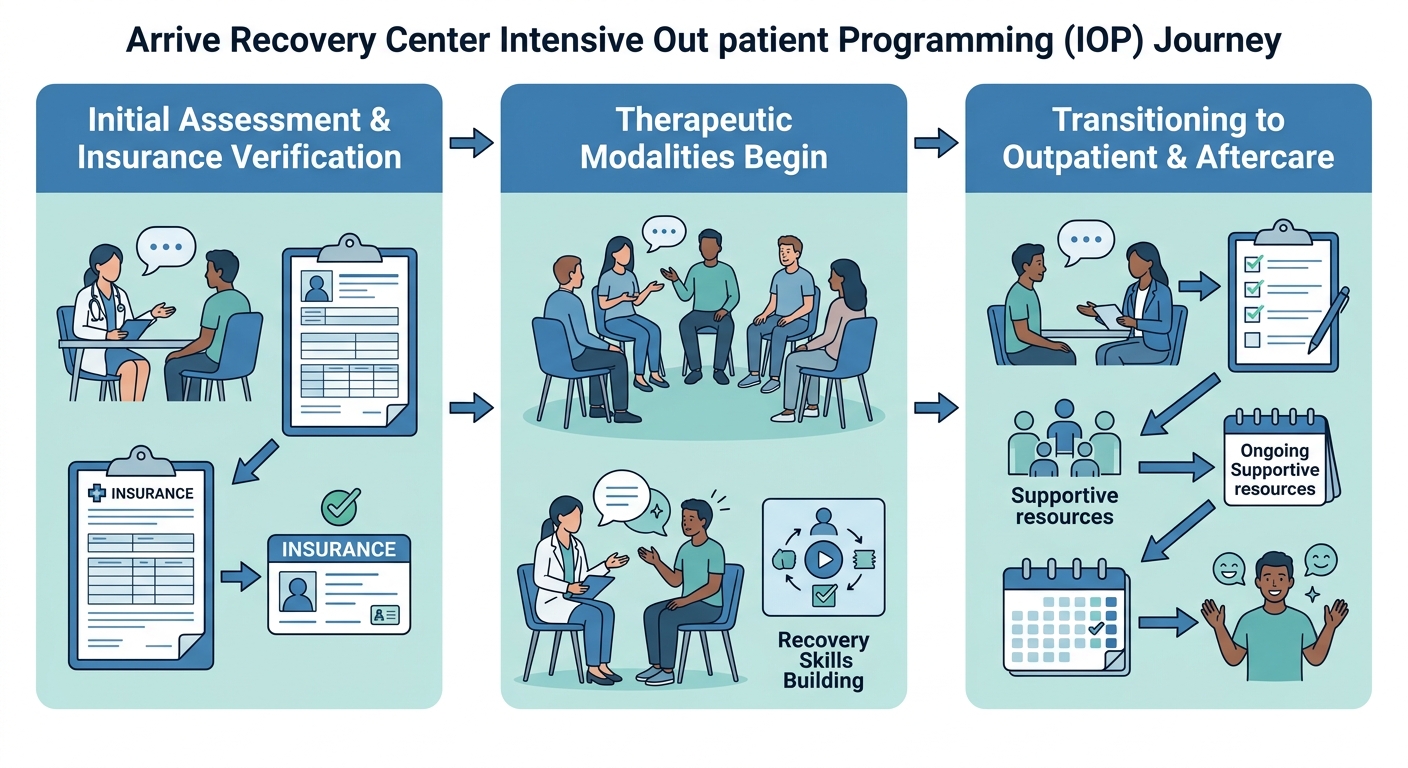
Step-by-step guide to starting an intensive outpatient program in Thousand Oaks.
Comparison of inpatient, PHP, and IOP levels of care
These three structural elements–comprehensive therapeutic components, a flexible weekly schedule, and a clearly defined place on the ASAM continuum–work together to create a recovery experience that is both clinically rigorous and adaptable. As we move into the next section, we will examine the specific therapies and personalized treatment journey you can expect at Arrive Recovery Center. Your recovery journey begins with a single step forward. Let’s take that step together.
This information is for educational purposes and is not a substitute for professional medical advice. If you are in crisis, call or text 988.
How an Intensive Outpatient Program Supports Your Work and Home Life in Thousand Oaks
At Arrive Recovery Center, our outpatient addiction treatment thousand oaks delivers the clinical intensity of an intensive outpatient program in Thousand Oaks on a schedule that fits your life. This intensive outpatient program in Thousand Oaks is built for individuals who need structured therapy while staying present for their families, careers, and personal responsibilities.
Maintaining Work and Family Life During Treatment
We know that taking time away from work or caregiving can feel impossible. That’s why our IOP offers evening and weekend sessions, allowing you to attend therapy without disrupting your job or home routine. Individual case management coordinates your sessions around school pickups, shift schedules, and other daily obligations. Group therapy and one-on-one counseling take place in the late afternoon or early evening, so you can return to your loved ones by bedtime. This flexible model keeps you anchored in your natural support system–your family and co-workers–while you build coping skills in a safe, therapeutic environment. Because treatment happens close to home in Ventura County, you spend less time commuting and more time living your recovery, not putting it on hold.
Comprehensive Dual Diagnosis Treatment
Substance use rarely travels alone. Many of our clients also experience anxiety, depression, trauma, or other mental health conditions. We treat both simultaneously through an integrated dual diagnosis approach in Thousand Oaks. Our licensed clinicians use evidence-based therapies such as Cognitive Behavioral Therapy (CBT), Dialectical Behavior Therapy (DBT), and EMDR to address root causes, not just symptoms. Based on clinical guidelines from SAMHSA’s TIP 47, we design personalized care that stabilizes both mood and substance use. This dual diagnosis treatment in Thousand Oaks means you receive medication evaluation when appropriate, trauma-focused work when needed, and continuous psychiatric oversight–all under one roof. By treating the whole person, we reduce the risk of relapse and help you reclaim emotional balance without putting your daily obligations on pause.
Long-Term Benefits and Aftercare Planning
Recovery doesn’t end when your session hours drop. Our team works with you from day one to craft a long-term wellness plan that includes relapse-prevention strategies like trigger identification, craving management, and ongoing coping skills practice. Family therapy sessions help rebuild trust and improve communication at home, transforming your household into a recovery ally. Our structured sober living coordination connects clients with safe, supportive housing options in the area. Once your intensive phase concludes, our alumni support network and aftercare programs provide regular check-ins, peer mentorship, and community events so you never feel alone. As a Joint Commission-accredited provider, we follow rigorous quality standards that guide this continuum of care. Individual results vary, and we encourage you to consult a healthcare professional for personalized advice. Your recovery journey begins with a single step forward–let’s take that step together.
Step-by-Step Guide to Starting an Intensive Outpatient Program in Thousand Oaks
Deciding to begin an intensive outpatient program in Thousand Oaks marks a courageous step toward reclaiming your life from addiction or mental health challenges. At Arrive Recovery Center, we make the entry process straightforward. Our iop program in Thousand Oaks follows a three-phase pathway: a confidential assessment and insurance check, a personalized treatment plan built around proven therapies, and a seamless transition through levels of care until you’re ready to thrive independently. Learn more about our iop program thousand oaks.
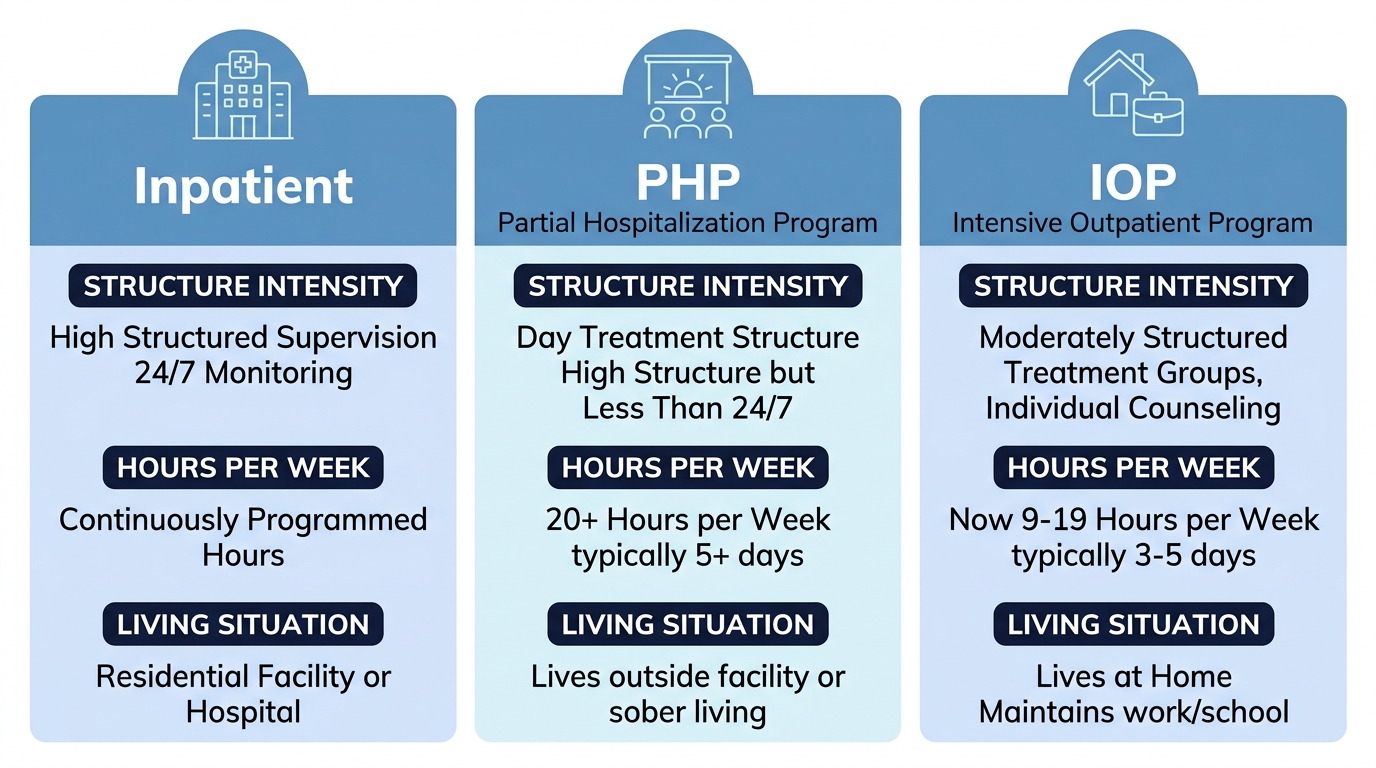
Comparison of inpatient, PHP, and IOP levels of care
Step-by-step guide to starting an intensive outpatient program in Thousand Oaks.
Initial Assessment and Insurance Verification
Your first step is a free, confidential telephone assessment where our admissions team learns about your history, current symptoms, and personal goals. We gather information about substance use patterns, co-occurring mental health conditions, and any prior treatment experiences so we can match you to the right level of care. Call for Confidential Assessment at (805) 303-5953 — we’re available to listen and guide you. Hablamos Español & English.
Next, we verify your insurance benefits by contacting your provider directly. We work with most major commercial insurers, including PPO and HMO plans, to confirm coverage for outpatient services. This ensures you understand what your plan covers before you commit to the program, removing financial uncertainty from the decision. Once benefits are confirmed, we schedule your intake and orient you to our Thousand Oaks facility, where your personalized recovery journey begins.
Therapeutic Modalities in Our IOP
Our intensive outpatient program in Thousand Oaks blends evidence-based therapies delivered in both group and individual formats to treat the whole person. Cognitive Behavioral Therapy (CBT) helps you identify and change unhelpful thinking patterns, while Dialectical Behavior Therapy (DBT) teaches emotional regulation and distress tolerance. For clients processing trauma, EMDR therapy provides a structured approach to reduce the power of painful memories. Motivational Interviewing strengthens your internal drive to change, and trauma-focused care ensures that underlying wounds are addressed safely.
Because every person is unique, your schedule–typically three hours a day, three to five days a week–is tailored to your clinical needs and life obligations. Group sessions build community and shared accountability, while individual therapy deepens self-awareness. Family involvement is encouraged to rebuild trust and communication, an approach that sets our program apart.
Transitioning from PHP to IOP and Beyond
Recovery is a continuum, and many clients step down to our intensive outpatient program after completing a partial hospitalization program in Thousand Oaks. Where PHP requires five to six hours of daily treatment, our IOP offers a more flexible rhythm while still providing substantial clinical support. As stability improves, you may transition to our Outpatient Program (OP) with fewer weekly hours, then continue with relapse prevention, alumni activities, and sober living coordination.
We follow the ASAM Criteria, the industry standard set by the American Society of Addiction Medicine for determining appropriate levels of care and patient placement. This framework ensures you receive the least intensive, yet effective, treatment at every stage. Our dual diagnosis treatment in Thousand Oaks addresses co-occurring mental health and substance use disorders throughout the entire continuum, reinforcing the skills you need for lasting sobriety. Joint Commission accreditation, personalized aftercare planning, and an emphasis on family participation underscore our commitment to your long-term success.
If you are in crisis, call or text 988 (Suicide & Crisis Lifeline) or seek immediate emergency care. This information is for educational purposes and is not a substitute for professional medical advice; consult a healthcare professional for diagnosis and treatment.
Maximizing Your Recovery Through Intensive Outpatient Program in Thousand Oaks
True recovery extends far beyond the hours you spend in treatment sessions. At Arrive Recovery Center, we believe that maximizing your success in our intensive outpatient program in Thousand Oaks means actively engaging with every layer of support we offer. Whether you are stepping down from a higher level of care or beginning your recovery journey in an outpatient setting, the tools and community you build here are designed to last a lifetime. For many individuals seeking a structured path, a comprehensive drug rehab Thousand Oaks program provides the essential foundation for healing, but it is the deeper elements of treatment that create resilient, long-term sobriety.
Our IOP in Thousand Oaks integrates evidence-based clinical practices with a compassionate, personalized approach. By addressing not only the substance use itself but also the underlying emotional and psychological patterns, we help you build a recovery that is both stable and fulfilling. This work is guided by the Substance Abuse and Mental Health Services Administration (SAMHSA), whose evidence-based guidelines emphasize the critical role of family involvement, relapse prevention strategies, and holistic care in achieving positive outcomes.
Engaging with Family Therapy and Support
Addiction often strains the bonds with those we love most, and healing those relationships is a vital part of the recovery process. Our family therapy sessions provide a safe, guided space where you and your loved ones can rebuild trust and improve communication. Many individuals in our outpatient program find that involving their family helps create a much stronger, more understanding home environment.
We also understand that substance use often co-occurs with other mental health conditions. For this reason, our dual diagnosis treatment ensures that family members learn about these interconnected challenges, fostering empathy rather than blame. When the family unit heals together, it transforms from a potential source of stress into a cornerstone of support, giving you a robust foundation to lean on during challenging moments.
Building a Relapse Prevention Plan
A personalized relapse prevention plan is your roadmap for navigating life after formal treatment ends. Rather than a generic list of warnings, our clinical team works with you one-on-one to identify your unique triggers, high-risk situations, and early warning signs of emotional decline. Together, we craft practical, actionable strategies that draw on cognitive behavioral techniques and addiction education.
This is not a document to simply file away. During your time in our intensive outpatient program in Thousand Oaks, you will practice these skills in real-time, refining your plan based on lived experience. From developing honest communication scripts to planning for unexpected cravings, your plan becomes a living tool. For some clients who transition from a hospital setting, this stands in clear contrast to the intensive daily structure of a partial hospitalization program, where you may have had fewer opportunities to apply these skills in your everyday environment. Here, the focus shifts from containment to conscious, practiced application.
Holistic Therapies and Alumni Support
True wellness engages the mind, body, and spirit. Our holistic therapy offerings are integrated into your treatment schedule to help you rediscover calm, build self-compassion, and manage stress in healthy ways. These modalities are not mere add-ons; they are essential practices for nervous system regulation and emotional healing. Our clients find profound benefit in:
- Guided meditation for centering and mindfulness
- Restorative yoga for physical and emotional release
- Expressive art therapy as a non-verbal channel for processing complex feelings
Your connection to our community doesn’t end at discharge. Our robust alumni support network keeps you linked to the peers, mentors, and resources that sustain long-term recovery. Through regular alumni events, check-ins, and volunteer opportunities, you remain a valued part of a supportive community that understands your journey. We serve clients across Ventura County and the greater Los Angeles area, and are proud to offer bilingual services (Hablamos Español & English) to ensure everyone has access to compassionate, ongoing care.
However, it is important to remember that individual outcomes depend on unique clinical circumstances. The information we provide is for educational purposes and is not a substitute for professional medical advice; always consult a healthcare professional for diagnosis and treatment. If you are in crisis, call or text 988 immediately.
Your recovery journey begins with a single step forward. Ready to begin your recovery journey? Call for a confidential assessment today.
Begin Your Recovery Journey with an Intensive Outpatient Program in Thousand Oaks
Begin Your Journey to Wellness with a flexible, evidence-based option that fits seamlessly into your daily life. Choosing an intensive outpatient program in Thousand Oaks allows you to receive structured therapeutic support while maintaining your work, school, and family commitments. At Arrive Recovery Center, we provide comprehensive care that empowers you to heal without putting your life on hold.
Our IOP serves as a vital step-down from more intensive levels of care like a partial hospitalization program in Thousand Oaks, or as a direct entry point for those who do not require residential treatment. What sets our program apart is its flexibility; you participate in a structured schedule of therapy and support groups during the day or evening, returning home afterward to practice recovery skills in a real-world environment. We utilize a blend of evidence-based modalities, including Cognitive Behavioral Therapy (CBT), Dialectical Behavior Therapy (DBT), and EMDR, integrated with group counseling and crucial relapse prevention education.
Central to our approach is treating the whole person, which is why we offer robust dual diagnosis treatment in Thousand Oaks. Our clinical team specializes in addressing co-occurring mental health conditions like anxiety disorders or depression, alongside substance use. Through our mental health iop thousand oaks, we create personalized treatment plans that target the root causes of addiction, not just the symptoms. Located conveniently in Ventura County, our center serves the greater Los Angeles area, providing a local, supportive community for your healing journey.
Your recovery journey begins with a single step forward. Let’s take that step together. For those requiring a more structured daily environment, our Partial Hospitalization Program offers a higher level of clinical support.
Resources
Find SAMHSA Substance Abuse Clinical Care Resources
Explore ASAM Criteria for Addiction Treatment Placement Standards
Thousand Oaks
CA
91362

