Table of Contents
Comprehensive Dual Diagnosis Treatment in Thousand Oaks, California
Dual diagnosis refers to the co-occurrence of a substance use disorder and a mental health condition such as depression, anxiety, or PTSD. At Arrive Recovery Center, we provide comprehensive dual diagnosis treatment Thousand Oaks, integrating care for both conditions at our outpatient facility in Ventura County.
According to the National Institute of Mental Health (NIMH), many individuals with substance use disorders also experience mental disorders, making integrated care essential. Our co-occurring disorders treatment programs address both challenges concurrently, blending evidence-based therapies and holistic support to treat the whole person.
Our integrated mental health and substance abuse services combine modalities like Cognitive Behavioral Therapy (CBT), Dialectical Behavior Therapy (DBT), and EMDR with holistic practices such as yoga and meditation. We tailor care through Partial Hospitalization (PHP), Intensive Outpatient (IOP), and standard outpatient (OP) levels to match individual needs.
Family involvement and aftercare support fortify recovery. Begin Your Journey to Wellness. Results may vary; individual outcomes depend on clinical circumstances. This information is for educational purposes and is not a substitute for professional medical advice; consult a healthcare professional for diagnosis and treatment. If you are in crisis, call or text 988.
Understanding Dual Diagnosis and Co-Occurring Disorders
Substance use rarely occurs in isolation. For many, it is deeply intertwined with mental health conditions, forming what clinicians call a dual diagnosis. For individuals seeking dual diagnosis treatment in Thousand Oaks, understanding this connection is the first step toward lasting recovery. At Arrive Recovery Center, we recognize that healing requires addressing both the mind and body simultaneously.
Defining Dual Diagnosis: Substance Use and Mental Health
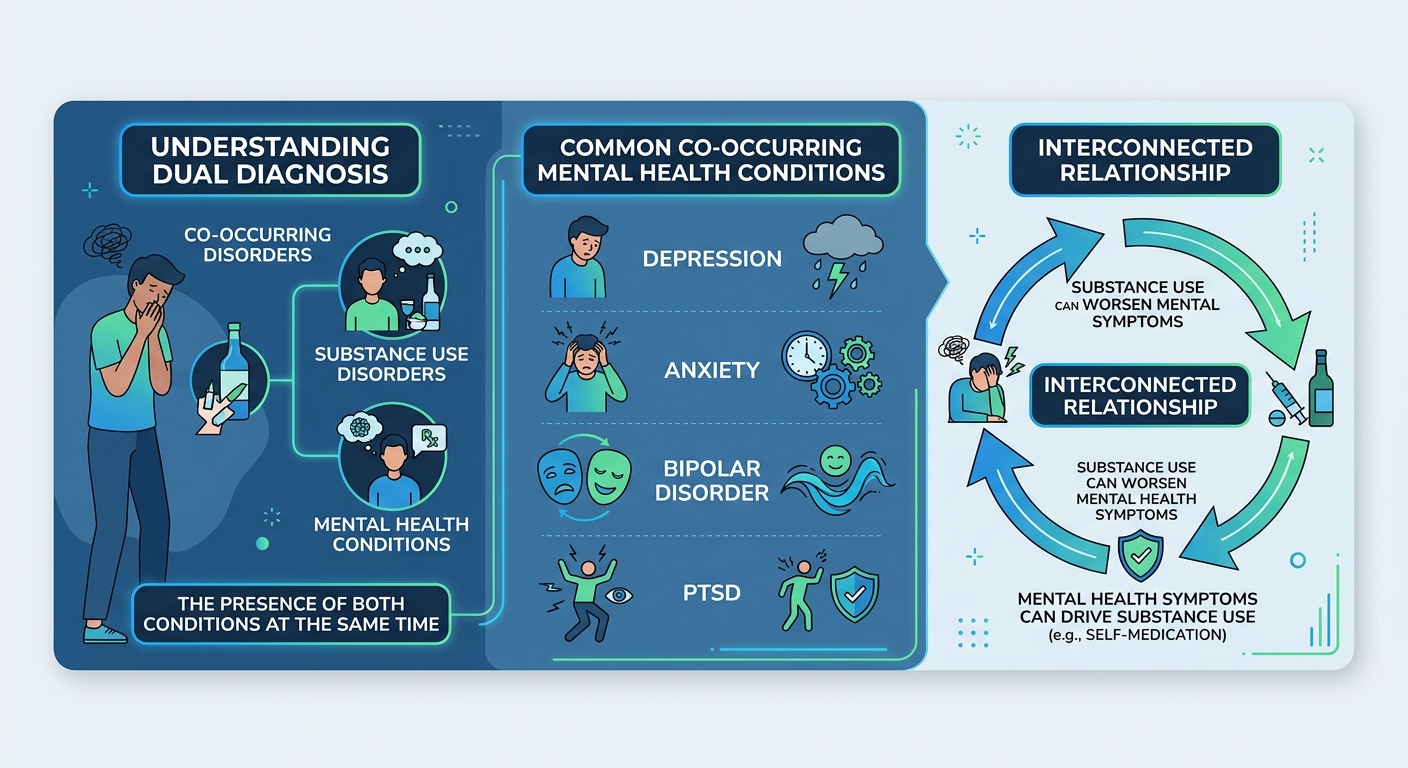
A dual diagnosis occurs when a substance use disorder (SUD) and a mental health disorder are present simultaneously. While the term co-occurring disorders is often used interchangeably, dual diagnosis specifically highlights the interactive nature of the two conditions–each can exacerbate the other. According to the Substance Abuse and Mental Health Services Administration (SAMHSA), nearly 9.2 million U.S. adults lived with co-occurring disorders in 2021. SAMHSA defines co-occurring disorders as the coexistence of a mental illness and a substance use disorder. This bidirectional relationship means that untreated mental health symptoms, such as persistent anxiety or depression, can drive substance use as a form of self-medication. Conversely, chronic substance use can worsen psychiatric symptoms, creating a cycle that is difficult to break without professional intervention. Because these conditions reinforce each other, treating only one side often results in incomplete recovery. Research shows that patients who receive care that addresses both substance use and mental health simultaneously experience lower relapse rates and better long-term outcomes. Therefore, clinical guidelines strongly recommend integrated treatment approaches.
Common mental health conditions that frequently accompany substance use include anxiety, depression, PTSD, and bipolar disorder.
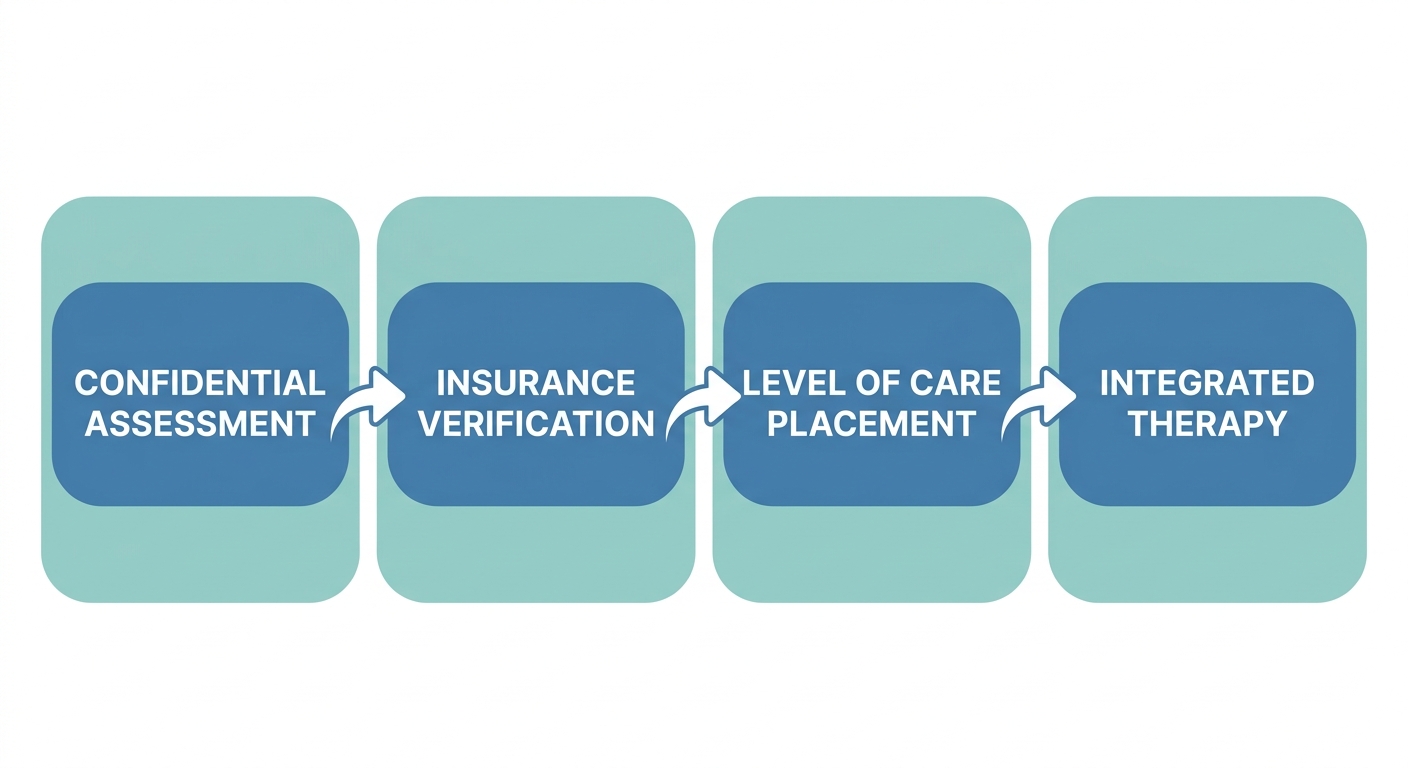
Dual diagnosis treatment process from assessment to therapy
Visual guide to dual diagnosis and co-occurring disorders
Common Co-Occurring Conditions and Their Impact
Each of these conditions can profoundly disrupt daily life and complicate addiction recovery:
- Anxiety disorders are the most common co-occurring condition. Chronic worry can lead to self-medication with substances, such as alcohol or benzodiazepines, which often intensifies anxiety over time and creates dependency.
- Depressive disorders sap energy and motivation. Substances may provide temporary relief from emotional pain, but they ultimately deepen depression and increase the risk of self-harm or suicidal ideation.
- Post-traumatic stress disorder (PTSD) involves flashbacks, hypervigilance, and emotional numbing. People may use drugs or alcohol to escape trauma memories, which can interfere with therapeutic progress and worsen symptoms in the long run.
- Bipolar disorder is characterized by extreme mood swings, and individuals may self-medicate manic highs or depressive lows. Substance use often destabilizes mood further and reduces the effectiveness of prescribed mood stabilizers.
For individuals in the area, our dual diagnosis treatment Ventura County program offers a compassionate, evidence-based path to recovery. Comprehensive co-occurring disorders treatment programs address both conditions concurrently, and we provide integrated mental health and substance abuse services that treat the whole person. This approach ensures that no aspect of a person’s health is overlooked, laying the groundwork for sustained wellness. If you are considering dual diagnosis treatment in Thousand Oaks, our team at Arrive Recovery Center is here to support you. Understanding these co-occurring conditions is the foundation for effective, lasting recovery–which is why we provide tailored treatment that meets the unique needs of each individual.
Results may vary; this information is educational and not a substitute for professional medical advice. If you are in crisis, call or text 988.
Benefits of Integrated Dual Diagnosis Treatment
Effective care for co-occurring conditions requires an approach that treats the whole person, not just isolated symptoms. At Arrive Recovery Center, we understand that mental health challenges and substance use disorders are deeply interconnected. Integrated dual diagnosis treatment addresses both simultaneously, leading to outcomes that sequential or parallel treatment models cannot match. This section explores the clinical evidence and personal transformations that make coordinated care the standard for lasting recovery.
Why Integrated Treatment Leads to Better Outcomes
When mental health and substance use disorders are treated together, the treatment retention rate improves dramatically. According to the Substance Abuse and Mental Health Services Administration (SAMHSA), integrated programs demonstrate treatment retention rates 30 to 50 percent higher than non-integrated approaches. For those exploring dual diagnosis treatment in Thousand Oaks, integrated care offers a path where psychiatric symptoms and substance use are addressed as parts of a unified clinical picture rather than separate issues.
Simultaneous treatment directly targets the underlying triggers that drive both conditions. Anxiety, depression, and trauma often fuel substance use, while withdrawal and addiction cycles worsen psychiatric symptoms. By providing dual diagnosis treatment Westlake Village, our team delivers coordinated care under one roof where therapists and medical professionals collaborate on a single treatment plan. This prevents the fragmented communication that often undermines progress in separate programs.
Research consistently shows that individuals receiving integrated mental health and substance abuse services achieve better medication adherence and more stable psychiatric symptom management. Patients learn to recognize how their mental health affects their sobriety and vice versa. This holistic dual diagnosis care model develops coping skills that apply across all areas of life, building a foundation that supports both emotional wellness and substance-free living. The evidence points clearly toward integrated treatment as the most effective approach for co-occurring disorders.
Long-Term Benefits of Healing Mind and Body
The immediate improvements patients experience during integrated treatment extend into lasting life changes. Longitudinal studies of co-occurring disorders treatment programs show that individuals who complete simultaneous care experience fewer acute psychiatric episodes in the years following treatment. Mental health stability becomes self-reinforcing as patients continue applying the skills they developed during their combined treatment for co-occurring conditions.
Substance use relapse rates drop significantly when underlying mental health conditions receive proper ongoing management. Our integrated mental health and substance abuse services equip patients with individualized strategies for managing cravings, identifying emotional triggers, and maintaining sobriety through life’s challenges. Family relationships often heal as loved ones witness consistent behavioral changes and improved communication patterns. The simultaneous care for mental health and addiction creates ripple effects that strengthen entire support networks.
Quality of life measures including employment stability, secure housing, and social functioning improve markedly among those who complete integrated programs. Patients report renewed confidence in their ability to pursue meaningful goals and maintain healthy relationships. This self-efficacy transforms the recovery experience from a constant struggle into an empowering journey of growth. Begin Your Journey to Wellness by taking the first step toward comprehensive care that addresses every aspect of your wellbeing. The benefits of integrated dual diagnosis treatment extend far beyond symptom reduction, creating a foundation for a fulfilling life in recovery.
This information is for educational purposes and is not a substitute for professional medical advice. Consult a healthcare professional for diagnosis and treatment. Results may vary; individual outcomes depend on clinical circumstances. If you are in crisis call or text 988 (Suicide & Crisis Lifeline) or seek immediate emergency care.
The Dual Diagnosis Treatment Process at Arrive Recovery Center
At Arrive Recovery Center, our dual diagnosis treatment process is designed to address both conditions simultaneously, offering a comprehensive path to recovery for those seeking dual diagnosis treatment thousand oaks. According to the National Institute of Mental Health (NIMH), many individuals with substance use disorders also experience mental health conditions such as depression or anxiety, which is why integrated care is essential. Here is how our process works, guiding you from the first confidential conversation to ongoing recovery.
The Admissions Process: From Confidential Assessment to Treatment Placement
Reaching out for help is the most important step. When you call Arrive Recovery Center at (805) 303-5953, you will speak with a trained intake coordinator for a confidential, no-obligation assessment. We understand the courage this requires, and our team is here to listen with compassion and respect. Hablamos Español & English.
During this initial call, we learn about your unique situation to understand your treatment needs. The admissions process follows these clear steps:
- Confidential Assessment: A conversation about your mental health history, substance use, and personal goals.
- Insurance Verification: Our team verifies your insurance benefits and checks coverage while you are on the phone, providing clarity without mentioning specific costs.
- Clinical Recommendation: Based on the assessment, our clinical team recommends the most appropriate level of outpatient care.
- Treatment Placement: We schedule your intake and welcome you into the Arrive Recovery Center community.
Visual guide to dual diagnosis and co-occurring disorders
Dual diagnosis treatment process from assessment to therapy
This streamlined process ensures timely placement so you can focus on what matters: your healing. Call for Confidential Assessment to take your first step forward.
Levels of Dual Diagnosis Care: PHP, IOP, and Outpatient Programs
Once admitted, clients enter a continuum of care tailored to their recovery journey. Our php program thousand oaks provides structured daytime treatment for those needing intensive support, typically meeting five to seven days per week. This level includes individual therapy, group counseling, and integrated mental health and substance abuse services, making it ideal for clients stepping down from residential care or requiring a high level of structure.
For clients who need flexibility to balance treatment with work, school, or family commitments, our Intensive Outpatient Program (IOP) offers a robust schedule of three to five days per week. As one of the core co-occurring disorders treatment programs in our center, IOP delivers a blend of evidence-based therapies, including Cognitive Behavioral Therapy, Dialectical Behavior Therapy, and EMDR, alongside relapse prevention education. All of our programs provide integrated treatment for co-occurring conditions, addressing the roots of both addiction and mental health challenges.
The standard Outpatient Program (OP) is designed for those further along in their recovery who can benefit from weekly therapy sessions. This level offers continued support through combined mental health and addiction therapy while allowing clients to practice independence in their daily lives. NIMH research underscores that effective dual diagnosis care relies on this kind of personalized, multi-level approach to promote lasting well-being.
Once placed in the appropriate level of care, clients engage in evidence-based therapies tailored to their unique needs. Begin Your Journey to Wellness with us today.
Best Practices for Lasting Recovery from Co-Occurring Disorders
Building on our understanding of dual diagnosis, let’s explore the practices that promote lasting recovery. At Arrive Recovery Center, we believe effective treatment must address the whole person, not just isolated symptoms. Our approach to dual diagnosis treatment in Thousand Oaks integrates proven therapeutic methods with compassionate, continuous support, guided by the principles set forth by the Substance Abuse and Mental Health Services Administration (SAMHSA).
Evidence-Based Therapies: CBT, DBT, and EMDR in Practice
Cognitive Behavioral Therapy (CBT) is a cornerstone of our integrated mental health and substance abuse services, as it directly addresses the cyclical relationship between thoughts, feelings, and behaviors. We help our clients identify the negative thought patterns that often underlie both anxiety and substance use. By learning to restructure these automatic thoughts, individuals gain the power to respond to triggers with healthier choices, a practice SAMHSA recognizes as fundamental in treating co-occurring conditions effectively.
Similarly, Dialectical Behavior Therapy (DBT) provides clients with a practical toolkit for managing intense emotions. Through skills like distress tolerance and emotional regulation, our clients learn to navigate moments of crisis without turning back to addictive substances. This is particularly important for those with dual diagnosis, where emotional dysregulation can be a primary driver of relapse. We also utilize Eye Movement Desensitization and Reprocessing (EMDR), a specialized, trauma-focused therapy. Many individuals facing substance use and mental health challenges have a history of trauma, and EMDR is clinically proven to reduce the distress associated with these traumatic memories, lessening their power as triggers.
Creating a Sustainable Recovery Plan with Aftercare Support
Structured, ongoing support is not a final step; it is the bridge to a fulfilling, independent life. Our co-occurring disorders treatment programs are designed with the understanding that recovery is a lifelong journey. We work with each client to develop a personalized relapse prevention plan, identifying their specific triggers and high-risk situations. This plan is a dynamic roadmap, refined over time and often includes scheduled family therapy sessions to rebuild trust and create a supportive home environment that is crucial for lasting sobriety.
Connecting clients to a stable living environment through our sober living coordination is another pillar of our approach. These homes offer a substance-free, structured setting where individuals can practice their new skills with peer support. Our commitment extends beyond primary care through our robust alumni programs and aftercare support, where individuals can continue their journey and become mentors. For individuals who need a step-down level of care after structured therapy, our IOP program Thousand Oaks offers a flexible schedule while reinforcing essential recovery skills. With a solid foundation of best practices, you may be wondering how to begin — that’s where our comprehensive programs come in.
Results may vary; individual outcomes depend on clinical circumstances. This information is for educational purposes and is not a substitute for professional medical advice; consult a healthcare professional for diagnosis and treatment. If you are in crisis, call or text 988 (Suicide & Crisis Lifeline) or seek immediate emergency care.
Begin Your Recovery Journey with Confidence
Begin your journey to wellness with the supportive professionals at Arrive Recovery Center. Our dual diagnosis treatment in Thousand Oaks helps individuals address both mental health and substance use disorders through integrated care. Our team combines clinical expertise with compassionate support to create individualized treatment plans that respect each person’s goals and circumstances.
We understand that recovery is a personal path, and we provide personalized outpatient programs and aftercare to support lasting change. Our co-occurring disorders treatment programs are designed to treat the whole person, using evidence-based therapies. Integrated mental health and substance abuse services ensure that every aspect of your well-being is considered. If you need immediate support, the Substance Abuse and Mental Health Services Administration (SAMHSA) National Helpline offers 24/7 confidential assistance at 1-800-662-4357. We coordinate care across providers and offer family involvement, relapse prevention, and ongoing alumni support to strengthen long-term recovery.
Your recovery journey begins with a single step forward. If you’re ready to begin, call for a confidential assessment. Consider drug rehab Thousand Oaks for personalized care that meets you where you are. We’re here to help you.
Resources
Learn About Dual Diagnosis and Integrated Treatment from NIMH
Discover SAMHSA Support for Co-occurring Mental Health and Substance Use
Thousand Oaks
CA
91362

