Table of Contents
Your Guide to Outpatient Rehab in Agoura Hills
Outpatient rehab is a form of structured addiction treatment that allows you to live at home while attending scheduled therapy sessions at our facility. Our outpatient rehab agoura hills services provide professional clinical support without the need for an overnight stay, making recovery accessible for those who must balance treatment with work, school, or family obligations. Unlike residential care, this level of treatment is often a starting point for mild to moderate substance use disorders or a step-down option after completing a more intensive program.
Choosing outpatient treatment in Agoura Hills offers significant flexibility while still delivering evidence-based care. You can continue meeting daily responsibilities and drawing strength from your existing support network at home. Our approach is ideal for individuals who are medically stable and motivated to recover but do not require round-the-clock supervision. This model fosters real-world application of coping skills, as you can immediately practice therapeutic techniques in your everyday environment.
At Arrive Recovery Center, we offer a full continuum of care, including a partial hospitalization program, an intensive outpatient program, and a standard outpatient program. Each level of outpatient substance use care near Agoura Hills is personalized and addresses co-occurring mental health conditions through dual-diagnosis treatment. Our clinical team integrates therapies such as CBT, DBT, and EMDR with holistic practices, ensuring a comprehensive plan that treats the whole person.
In the following sections, we explore each program level in more detail to help you determine the right fit for your recovery journey.
This information is for educational purposes and is not a substitute for professional medical advice; consult a healthcare professional for diagnosis and treatment.
Understanding Outpatient Levels of Care: PHP, IOP, and More
When you begin exploring outpatient rehab in Agoura Hills, understanding the different levels of care is essential for starting a successful recovery. At Arrive Recovery Center, we offer a full continuum of programs–Partial Hospitalization Program (PHP), Intensive Outpatient Program (IOP), and Outpatient Program (OP)–that follow American Society of Addiction Medicine (ASAM) criteria, ensuring treatment intensity matches your clinical needs. Our center provides San Fernando Valley outpatient treatment to clients throughout the region, helping you find the right balance of structure and autonomy. Please note that this information is for educational purposes and is not a substitute for professional medical advice; consult a healthcare professional for diagnosis and treatment.
| Program Level | Time Commitment | Medical Supervision | Ideal For |
|---|---|---|---|
| Partial Hospitalization Program (PHP) | 20-30 hours/week, typically 5-6 days per week | Daily medical monitoring and access to nurses | Individuals needing structured care but not 24/7 residential treatment |
| Intensive Outpatient Program (IOP) | 9-15 hours/week, typically 3-5 days per week | Weekly check-ins; less intensive than PHP | Those with stable living environments who need flexible therapy |
| Outpatient Program (OP) | 1-3 hours/week, often weekly sessions | Minimal; focused on therapy and support | Step-down after IOP or mild cases requiring ongoing counseling |
As the table shows, the time commitment and medical oversight decrease from PHP to OP, allowing you to gradually reclaim independence while still receiving professional support. This stepped approach mirrors the natural progression of healing, making it easier to transition back to everyday life.
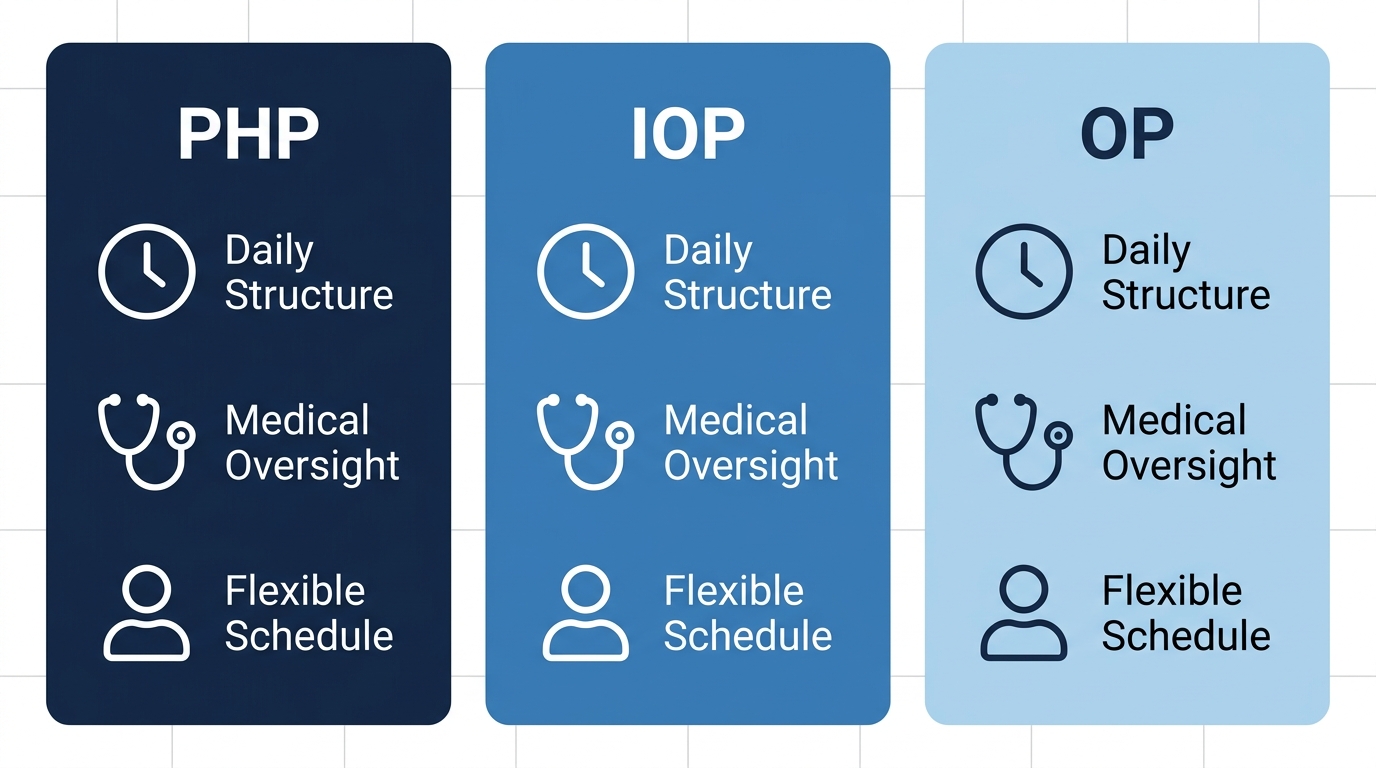
Outpatient levels of care comparison: PHP, IOP, and OP
Now let’s look at each level in detail to help you decide where you might fit best.
Partial Hospitalization Program (PHP)
Partial hospitalization program (PHP) is our most intensive outpatient option, requiring 20 to 30 hours of treatment per week, typically spread over 5 or 6 days. You receive daily medical monitoring and have access to nursing staff, which makes PHP ideal for those stepping down from residential care or who need highly structured support without overnight stays. Through group sessions, individual therapy, and holistic activities, you build relapse-prevention skills while returning home each evening.
Intensive Outpatient Program (IOP)
The intensive outpatient program (IOP) offers a flexible schedule with 9 to 15 hours per week, usually over 3 to 5 days. Medical check-ins occur weekly, providing a safety net as you increase your personal responsibility. IOP is an excellent fit if you have a stable living environment and need therapy around work, school, or family commitments. This level reinforces the progress you made in PHP and furthers your recovery skills.
Outpatient Program (OP)
The outpatient program (OP) involves just 1 to 3 hours per week, often through a single weekly session. Medical supervision is minimal, and the focus shifts to ongoing counseling and relapse prevention. For those seeking outpatient treatment in Agoura Hills, our OP level ensures you continue receiving professional support while living independently. It serves as a step-down after IOP or as a starting point for milder cases that don’t require daily structured therapy.
Each person’s recovery journey is unique, and we adjust your level of care based on your progress and changing needs. Your recovery journey begins with a single step forward. At Arrive Recovery Center, we’ll help you take that first step through a confidential assessment, which we’ll explore in the next section.
Therapeutic Approaches and Daily Life in Outpatient Treatment
Choosing an outpatient treatment program means engaging in a structured yet flexible recovery experience that addresses both substance use and the underlying mental health factors that often fuel it. At Arrive Recovery Center in Thousand Oaks, our clinical team designs individualized treatment plans that integrate evidence-based therapies, holistic activities, and dual diagnosis care. This approach helps you build coping skills while maintaining your daily responsibilities, creating a foundation for lasting wellness.
Evidence-Based Therapies in Outpatient Care
Our outpatient services draw from several proven therapeutic modalities, each targeting different aspects of addiction and co-occurring conditions. Cognitive Behavioral Therapy (CBT) helps you identify and change the negative thought patterns that contribute to substance use, using techniques like journaling and cognitive restructuring. This method proves particularly effective for anxiety and depression that often accompany addiction. Dialectical Behavior Therapy (DBT) focuses on emotion regulation and distress tolerance, teaching mindfulness and interpersonal effectiveness skills that help you navigate intense feelings without turning to substances.
For individuals whose addiction stems from unresolved trauma, EMDR therapy offers a path to process painful memories through bilateral stimulation and reprocessing techniques. This approach addresses PTSD and trauma-related substance use by helping the brain heal from distressing experiences. Family therapy complements individual work by healing relationship dynamics, improving communication, and building the support systems essential for sustainable recovery. Each of these therapies operates within our outpatient framework, allowing you to practice new skills in real-world settings between sessions. The following table summarizes the unique focus of each modality:
| Therapy | Focus Area | Techniques | Best For |
|---|---|---|---|
| Cognitive Behavioral Therapy (CBT) | Identifying and changing negative thought patterns | Journaling, cognitive restructuring, exposure therapy | Anxiety, depression, and substance use disorders |
| Dialectical Behavior Therapy (DBT) | Emotion regulation and distress tolerance | Mindfulness, interpersonal effectiveness, grounding | Borderline personality disorder, self-harm, intense emotions |
| EMDR Therapy | Processing trauma through eye movements | Bilateral stimulation, reprocessing, desensitization | PTSD and trauma-related substance use |
| Family Therapy | Healing relationships and building support systems | Communication exercises, systemic interventions | Families affected by addiction, codependency, and enabling |
Our clinical team in Ventura County integrates these approaches based on your specific needs, ensuring that trauma and co-occurring conditions receive focused attention throughout your treatment journey. By combining modalities, we address the complex interplay between mental health and substance use that often requires nuanced, multifaceted care.
A Day in a Partial Hospitalization Program
A typical day in our Partial Hospitalization Program provides structure and therapeutic intensity while allowing you to return home or to sober living in the evenings. Your day might begin with a morning check-in and mindfulness session, setting a grounded tone for the hours ahead. Group therapy forms the core of the daily schedule, offering a supportive environment where we explore topics like relapse prevention, emotional regulation, and interpersonal skills alongside peers who understand your challenges.
Individual counseling sessions provide one-on-one time with your primary therapist to process personal issues and track your progress toward treatment goals. Holistic activities such as yoga or meditation create space for body-based healing and stress reduction, reinforcing the mind-body connection essential to recovery. Our bilingual team ensures that both English and Spanish-speaking clients feel fully included in every aspect of the program. Throughout the day, you practice the coping skills you are learning in a safe, structured environment before applying them in your evening hours outside the center.
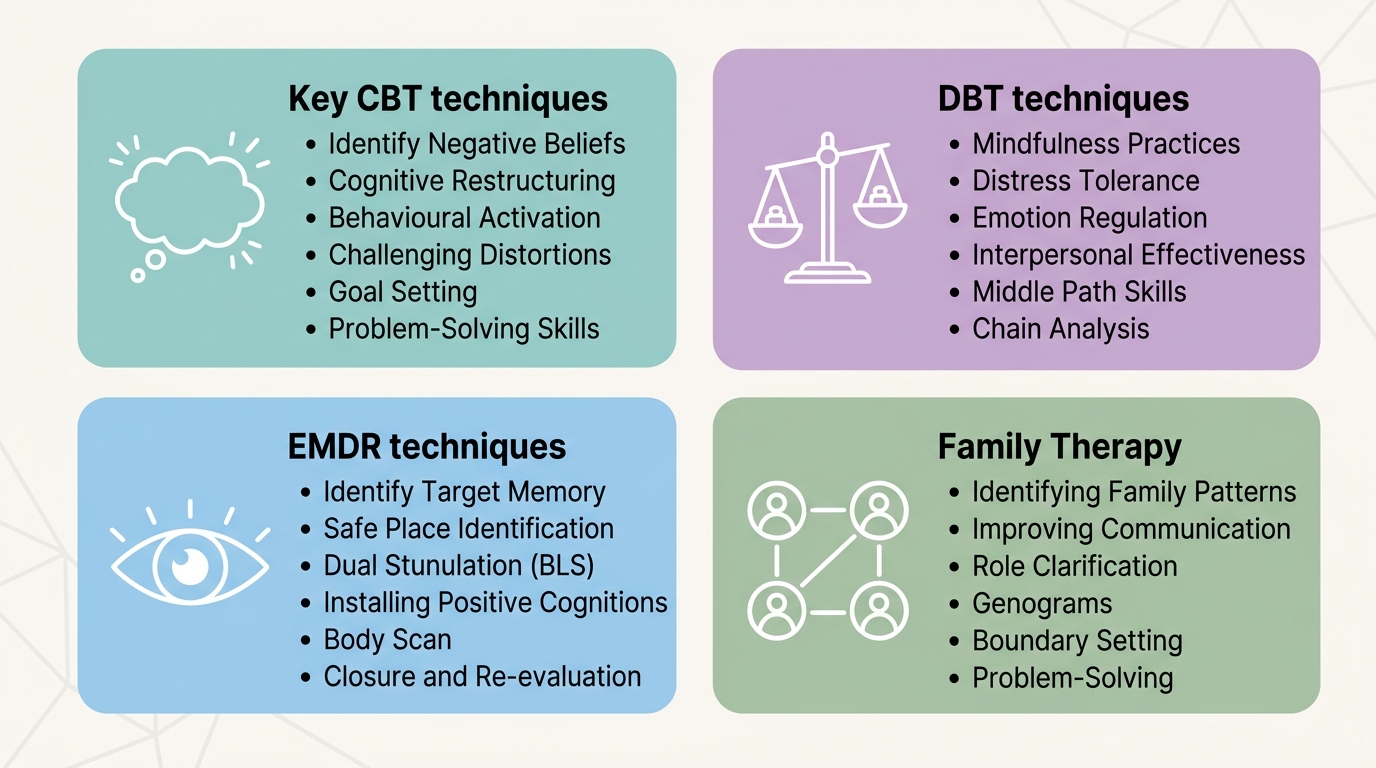
Therapeutic approaches in outpatient addiction treatment
Dual Diagnosis and IOP Effectiveness
Our Intensive Outpatient Program builds on the same clinical philosophy as PHP but with a schedule that accommodates work, school, or family commitments. The cornerstone of IOP effectiveness lies in dual diagnosis treatment, which means we address mental health conditions and substance use disorders simultaneously rather than treating them as separate issues. This integrated approach recognizes that depression, anxiety, trauma, and other conditions often drive addictive behaviors, and that lasting recovery depends on healing both.
During IOP sessions, you continue working with evidence-based therapies while practicing recovery skills in your daily life between appointments. The program includes group therapy, individual check-ins, and family involvement, all coordinated by our licensed clinicians and case managers. Because you spend more time in your home environment, you have immediate opportunities to apply coping strategies and then return to the group to process what worked and what felt challenging. This real-time feedback loop strengthens your resilience and builds confidence in your ability to maintain sobriety. Results may vary; individual outcomes depend on clinical circumstances. This information is for educational purposes and is not a substitute for professional medical advice; consult a healthcare professional for diagnosis and treatment.
Navigating Insurance and Balancing Responsibilities in Outpatient Rehab
Now that you understand the different levels of outpatient care available at Arrive Recovery Center, the next step is figuring out how to pay for treatment and how to fit it into your daily life. If you’re seeking outpatient rehab in Agoura Hills, our team is here to guide you through the insurance verification process and help you maintain your work and family commitments while receiving effective care.
Verifying Your Insurance Benefits for Outpatient Rehab
Verifying your insurance benefits is a straightforward and confidential process at Arrive Recovery Center. To get started, simply call our assessment line at (805) 303-5953 or submit our online inquiry form. A caring admissions coordinator will walk you through the following steps:
- Gather your insurance information. Have your insurance card ready with your member ID, group number, and plan type (for example, PPO or HMO). This ensures we can quickly confirm your eligibility.
- We contact your insurer on your behalf. Our team verifies your benefits for outpatient programs, including partial hospitalization program (PHP), intensive outpatient program (IOP), and outpatient programming (OP). We check for any required pre-authorizations, deductibles, and copays.
- You receive a clear summary. We’ll provide a detailed breakdown of what your plan covers for therapy, medication management, and other services, so you understand any potential financial responsibilities before you begin treatment. Please note that this verification is not a guarantee of payment; final coverage determinations are made by your insurance carrier.
This confidential check typically takes only minutes, and we handle all communication with your insurer so you can focus on what matters most — your recovery. Hablamos Español & English — our admissions coordinators are ready to help in your preferred language.
What Insurance Typically Covers for PHP and IOP
Once your benefits are verified, it’s helpful to know what services your plan is likely to cover. Most commercial insurance policies include core components of outpatient care such as individual therapy, group counseling, medication management, and family therapy. Coverage details, however, vary significantly based on your plan’s structure — especially whether you have a PPO or HMO. Before treatment begins, we recommend understanding how your plan handles costs such as deductibles and copays; our team can explain these terms without any pressure or obligation. The table below contrasts the typical features of PPO and HMO plans when it comes to outpatient rehab.
| Insurance Type | Provider Access | Out-of-Pocket Costs | Coverage for Rehab |
|---|---|---|---|
| PPO Plans | Freedom to choose any provider; often out-of-network options | Higher premiums but deductibles and copays vary | Typically covers PHP, IOP, and OP; some plans have no outpatient cap |
| HMO Plans | Must use in-network providers; rarely covers out-of-network | Lower premiums but copays and referrals required | May cover PHP/IOP with pre-authorization; strict medical necessity criteria |
While these are general patterns and not guarantees, they illustrate key differences. For example, many PPO policies will cover the full continuum of outpatient care — from partial hospitalization to standard outpatient — without an annual visit cap. HMO plans, on the other hand, often require a referral from a primary care physician and ongoing pre-authorization for each level of care. Dual-diagnosis treatment for co-occurring mental health conditions may be covered under either plan type when your provider demonstrates medical necessity, but you should confirm with your insurer because criteria can be strict. Remember that pre-authorization does not guarantee payment; final coverage decisions rest with your insurance company.
Balancing Work, Family, and Outpatient Treatment
One of the greatest advantages of outpatient care is its flexibility. At Arrive Recovery Center, our intensive outpatient program (IOP) offers evening groups and weekend sessions, allowing you to maintain your job, care for your family, and stay engaged in your recovery simultaneously. Men and women from Calabasas and surrounding areas find that outpatient rehab Calabasas provides the structure they need without requiring a leave of absence from work.
PHP and IOP sessions are available in the morning, afternoon, or evening, and we offer weekend programming to accommodate diverse schedules. This flexibility allows you to stay employed or in school while receiving the structured support you need. Our treatment plans are built around your life, not the other way around.
Outpatient treatment is particularly well-suited for individuals with moderate substance use disorders, a supportive home environment, and a commitment to recovery. Because you return home each night, you can practice new coping skills in real-world settings with the guidance of your therapist. With the right support, you can attend therapy sessions that fit your routine, participate in family counseling on weekends, and still be present for school pickups or important meetings.
Once your insurance is verified and you have a schedule that works, you can begin the admission process. Your recovery journey begins with a single step forward — let’s take that step together.
This information is for educational purposes and is not a substitute for professional medical advice; consult a healthcare professional for diagnosis and treatment. Results may vary; individual outcomes depend on clinical circumstances.
Continuing Your Recovery Journey: Aftercare and Holistic Support
Completing an outpatient rehab in Agoura Hills program is a significant achievement, yet recovery is an ongoing process that requires continued care. At Arrive Recovery Center, we view aftercare as the essential bridge that connects the skills learned in a partial hospitalization program or intensive outpatient program with the realities of daily life. Our approach integrates evidence-based practices with holistic therapies to solidify your foundation for lasting wellness.
We provide a suite of holistic therapies, including yoga, meditation, and art therapy, to help manage stress and regulate emotions in a healthy way. These practices are not just supplementary activities but core components of self-care that reduce the risk of relapse by offering positive outlets for challenging feelings. Alongside these therapies, our alumni support network fosters continued connection and accountability through regular gatherings and peer encouragement, ensuring you remain supported by a community that understands your journey.
A personalized aftercare plan is vital, and we tailor every strategy to align with your individual recovery goals, clinical needs, and lifestyle. This plan often integrates family therapy to strengthen the home environment, because a supportive family unit is a powerful asset in sustaining sobriety. Our dedication to high-quality, individualized care is reflected in our Joint Commission accreditation, a mark of excellence that underscores our commitment to safe and effective outpatient substance abuse treatment.
Aftercare at Arrive Recovery Center ensures that the transition out of a structured treatment environment does not mean you are alone. We walk with you step by step. Ready to Begin Your Recovery Journey? Call for Confidential Assessment to explore how our personalized aftercare programs can support your long-term path. Results may vary; individual outcomes depend on clinical circumstances. This information is for educational purposes and is not a substitute for professional medical advice; consult a healthcare professional for diagnosis and treatment. If you are in crisis call or text 988.
Common Questions About Outpatient Rehab in Agoura Hills
What is the difference between outpatient rehab and residential treatment? Outpatient rehab, including our partial hospitalization and intensive outpatient programs, lets you live at home while attending therapy. Residential treatment requires full-time, on-site care.
How long does outpatient rehab typically last? Programs range from a few months to a year, based on your progress. We tailor length to your recovery journey.
What types of therapy are offered in outpatient rehab at Arrive? Our programs include CBT, DBT, EMDR, and other therapies. For those nearby, our woodland hills outpatient rehab program offers similar care.
Does insurance cover outpatient rehab in Agoura Hills? We accept most major insurance plans and verify your benefits so you understand what’s covered.
Your recovery journey begins with a single step forward–let’s take that step together.
Begin Your Recovery Journey with Confidence
Begin Your Journey to Wellness with outpatient rehab in Agoura Hills. We are here to help you take that first step toward healing. Our outpatient rehab San Fernando Valley provides flexible, personalized care that fits your schedule and supports your goals. We tailor every program to your unique circumstances, offering structured day treatment and intensive outpatient options. Your recovery journey begins with a single step forward. Let’s take that step together and explore our Partial Hospitalization Program and Intensive Outpatient Program.
Thousand Oaks
CA
91362

