Table of Contents
Comprehensive Guide to Outpatient Rehab in Moorpark, California
For those seeking flexible recovery options, outpatient rehab in Moorpark offers a structured yet adaptable path forward. This form of treatment allows individuals to live at home and maintain work or family commitments while attending scheduled therapy sessions, making it a vital resource for the community.
Our center, Arrive Recovery Center Thousand Oaks, is conveniently located to serve residents of Moorpark and all of Ventura County. We provide a full continuum of outpatient care, starting with a highly structured day program and stepping down to less intensive support. This begins with our Partial Hospitalization Program (PHP), offering the most structure. It is followed by our intensive outpatient program in Ventura County (IOP), a middle tier that balances rigorous therapy with personal flexibility. Finally, our standard Outpatient Program (OP) provides ongoing support with a minimal weekly time commitment.
A critical component of our care model is dual diagnosis treatment for Moorpark residents, which addresses co-occurring mental health and substance use disorders simultaneously. We understand these challenges are often deeply connected and require an integrated therapeutic approach. For those seeking immediate help beyond our center, the Substance Abuse and Mental Health Services Administration (SAMHSA) National Helpline at 1-800-662-HELP (4357) is a confidential, 24/7 government resource for treatment referrals and information.
We accept most major commercial insurance plans and our team handles benefit verification. Contact us for a confidential assessment. Begin Your Journey to Wellness.
Disclaimer: Results may vary; individual outcomes depend on clinical circumstances. This information is for educational purposes and is not a substitute for professional medical advice.
Understanding Outpatient Rehab Levels of Care in Moorpark
When seeking recovery, understanding the levels of outpatient rehab in Moorpark is essential for choosing the right treatment path. At Arrive Recovery Center, we provide a full continuum of outpatient care that meets you wherever you are, with personalized support at every stage.
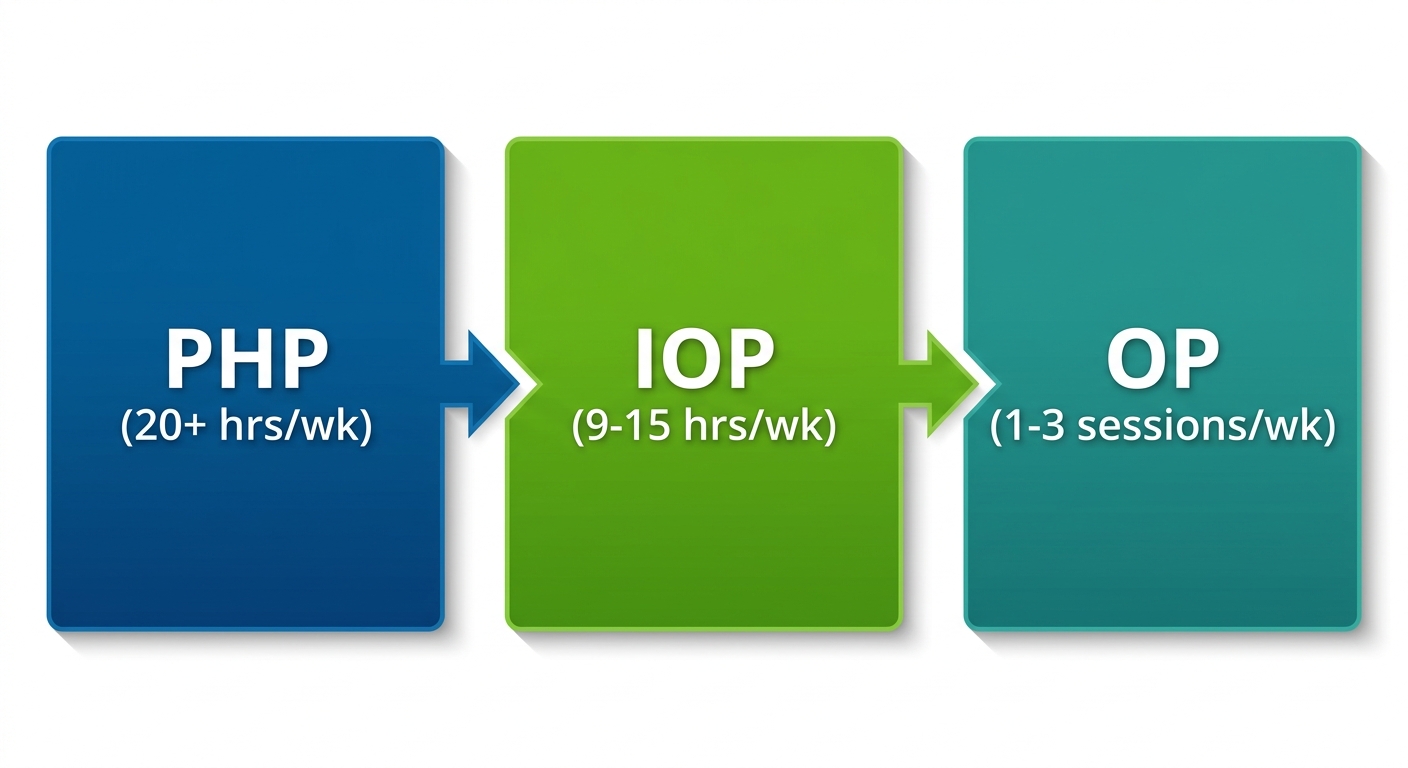
Outpatient rehab levels of care from PHP to IOP to OP
Our programs progress from more intensive to less intensive support, ensuring you receive the right structure at the right time.
Partial Hospitalization Programs (PHP)
According to the Substance Abuse and Mental Health Services Administration (SAMHSA), a Partial Hospitalization Program is a non-residential, intensive level of care that provides comprehensive therapeutic services and medical oversight. In our PHP in Moorpark, you attend structured treatment five to seven days per week, totaling 20 or more hours, while returning home each evening. This level combines individual and group therapy, medication management, and dual diagnosis care for co-occurring mental health conditions. PHP is ideal if you need daily clinical structure but do not require 24-hour residential supervision, often serving as the first step after detox or a residential stay. It forms the highest-intensity tier within our outpatient continuum, offering robust support during early recovery.
Intensive Outpatient Programs (IOP)
Our intensive outpatient program in Ventura County provides a flexible yet clinically rigorous alternative for those who need substantial therapeutic support while maintaining work, school, or family commitments. SAMHSA outlines IOP as a level of care that typically delivers 9 to 15 hours of therapy per week, often scheduled over three to five days, frequently during evening hours. Sessions include individual counseling, group therapy, skills training, and family therapy, with a strong emphasis on relapse prevention and coping strategies. Dual diagnosis treatment remains integrated throughout IOP, addressing any underlying mental health conditions. This level is well-suited as a step-down from PHP once greater independence is achieved, or as a primary treatment for a moderate substance use disorder.
Outpatient Programs (OP) and Transitional Care
The standard Outpatient Program is the least intensive level, typically involving one to three individual or group counseling sessions per week. It serves as a step-down from IOP for those who have built a stable recovery foundation, or as an entry point for milder substance use concerns. In OP, you continue to receive dual diagnosis support, relapse prevention education, and case management while gradually increasing your self-management skills. For individuals looking for similar options in a neighboring community, our outpatient rehab Calabasas offers the same continuum of care. This level reinforces long-term recovery by blending professional guidance with real-world application.
In the following sections, we explore each of these options in greater depth to help you decide which path aligns with your recovery goals. Your recovery journey begins with a single step forward. Let’s take that step together.
This information is for educational purposes and is not a substitute for professional medical advice; consult a healthcare professional for diagnosis and treatment.
Benefits of Outpatient Rehab for Substance Use Disorders
Our outpatient treatment programs offer a structured yet flexible path to recovery that allows you to maintain the rhythms of daily life while receiving clinical care. For individuals seeking outpatient rehab in Moorpark and throughout Ventura County, this approach provides essential therapeutic support without the complete disruption of residential treatment.
Flexibility to Maintain Work and Family Life
One of the most significant advantages of outpatient care is the ability to continue working, attending school, or caring for family while in treatment. Our intensive outpatient program in Ventura County schedules sessions during morning, afternoon, or evening hours so clients can meet personal and professional obligations. This real-world setting also offers the chance to practice coping strategies and relapse-prevention skills immediately, reinforcing new behaviors in the environments where they matter most. Regulated by the California Department of Managed Health Care, our outpatient model adheres to strict clinical standards while honoring each client’s need for normalcy and independence. This flexibility promotes adherence to treatment and lets clients apply new skills in everyday situations with consistent professional support from our care team.
Integrated Dual Diagnosis Treatment
Many individuals who struggle with substance use also experience co-occurring mental health conditions such as depression, anxiety, or trauma-related disorders. Our dual diagnosis treatment in Moorpark integrates psychiatric care with addiction support, ensuring both concerns are addressed simultaneously by the same clinical team. Licensed therapists trained in trauma-focused modalities — including EMDR — work collaboratively to uncover root causes and build resilience. This integrated approach prevents the gaps that often occur when mental health and substance use are treated in separate settings, offering a more cohesive and sustainable recovery path. Coordinated care plans allow psychiatric medication management, psychotherapy, and case management to proceed in tandem, improving outcomes and continuity of care over time.
Access to Evidence-Based Therapies
Effective outpatient rehab relies on therapies proven to create lasting change. We utilize Cognitive Behavioral Therapy (CBT) to help clients identify and modify harmful thought patterns, Dialectical Behavior Therapy (DBT) to strengthen emotional regulation and interpersonal skills, and Eye Movement Desensitization and Reprocessing (EMDR) to process trauma without extensive retraumatization. Each plan is personalized, incorporating modalities that align with the client’s clinical presentation and personal goals. Regular collaboration with our licensed clinicians ensures that care evolves as needs shift, keeping the recovery process both responsive and grounded in research. We tailor each modality’s intensity and sequencing to match client readiness, ensuring interventions are both practical and sustainable in outpatient settings locally. Begin your journey to wellness today.
How Outpatient Addiction Treatment Works in Moorpark
Moving from understanding the options to the actual process, here’s how our outpatient program works step by step. When seeking outpatient rehab in Moorpark, the path to recovery begins with a simple, confidential phone call to our admissions team. We understand that reaching out for help takes courage, and we’ve designed every step of our process to be transparent, supportive, and tailored to your unique situation.
Initial Assessment and Insurance Verification
We begin with a confidential phone assessment conducted by one of our licensed intake coordinators. During this call, we gather essential information about your substance use history, any co-occurring mental health concerns, and your personal recovery goals. This information helps us determine the appropriate level of care–whether that’s our Partial Hospitalization Program, our intensive outpatient program Ventura County residents rely on, or a standard outpatient track–following the ASAM criteria established by the Substance Abuse and Mental Health Services Administration (SAMHSA).
Once we understand your clinical needs, our team handles the insurance verification process on your behalf. We contact your insurance provider directly to confirm coverage for outpatient services and explain any out-of-pocket costs, ensuring there are no surprises before treatment begins. For those near Woodland Hills, our woodland hills outpatient rehab program offers the same personalized care and streamlined admissions process.
Developing a Personalized Treatment Plan
After the assessment is complete, our clinicians develop a customized treatment plan that addresses your specific needs. This plan incorporates evidence-based therapies that form the foundation of our clinical approach:
- Cognitive Behavioral Therapy (CBT) to identify and reshape harmful thought patterns
- Dialectical Behavior Therapy (DBT) for emotional regulation and distress tolerance
- EMDR therapy to process trauma that may underlie substance use
- Motivational Interviewing to strengthen your commitment to change
- Group and family counseling to build a supportive recovery community
Because we specialize in dual diagnosis treatment Moorpark clients can access integrated care for both substance use disorders and co-occurring mental health conditions simultaneously. SAMHSA recognizes this integrated approach as a best practice for achieving lasting recovery outcomes. Your plan includes clear therapeutic goals, scheduling preferences, and a roadmap that evolves as you progress through the program.
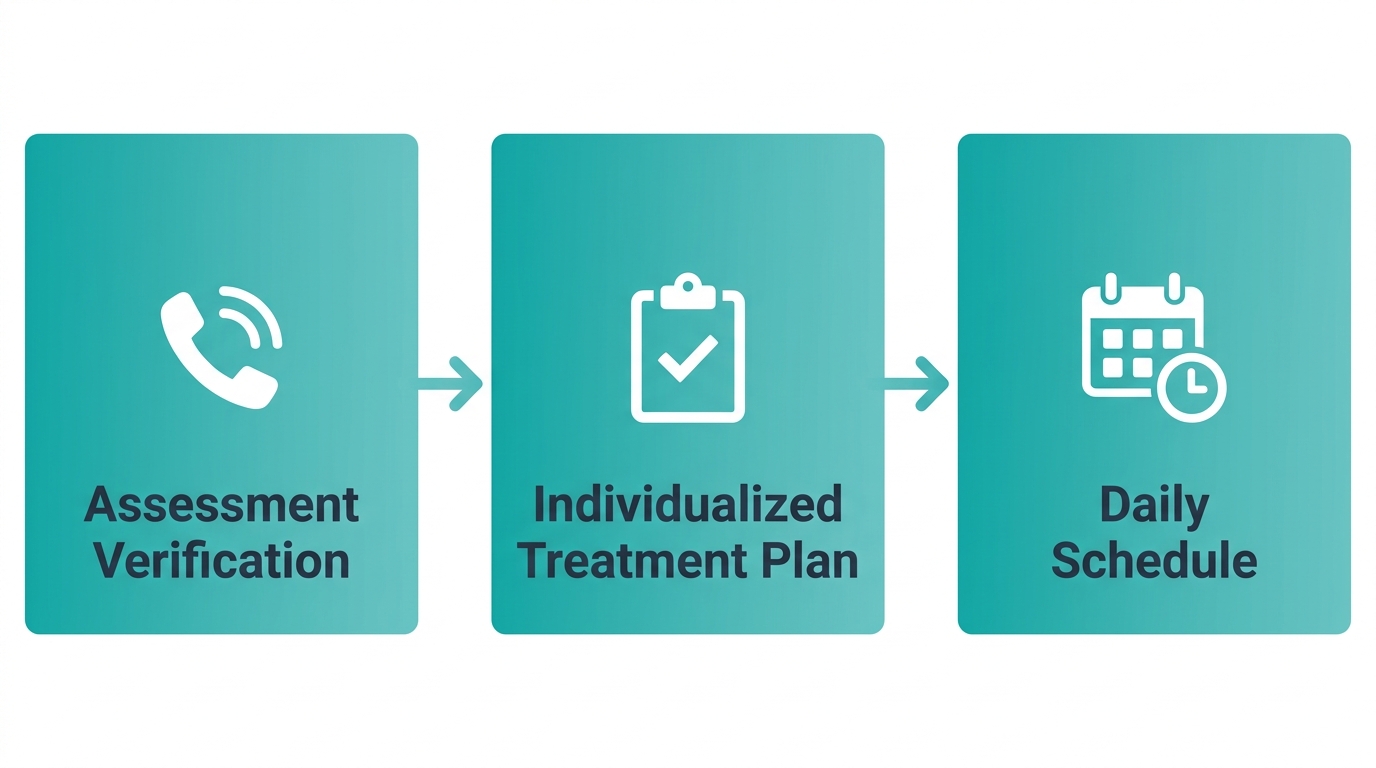
Outpatient treatment enrollment process from assessment to daily program.
A Typical Day in an Outpatient Program
A typical day in our outpatient program is structured yet flexible enough to accommodate work, school, or family obligations. Clients attending our Intensive Outpatient Program participate in morning or evening blocks designed to fit around their existing responsibilities. A sample weekly schedule might include three group therapy sessions, one individual therapy session, and one family session, all grounded in relapse prevention and coping skills development.
Group counseling sessions explore topics such as trigger identification, stress management, and building a sober support network. Our holistic offerings–including yoga, meditation, and art therapy–complement the clinical work by promoting mind-body wellness. These evening hours make outpatient rehab in Moorpark both accessible and effective for those who cannot pause their daily lives to seek treatment.
Now that you understand how it works, let’s explore the outcomes you can expect. Begin Your Journey to Wellness by taking that first step. Your recovery journey begins with a single step forward. Let’s take that step together. Call for Confidential Assessment today.
This information is for educational purposes and is not a substitute for professional medical advice. If you are in crisis, call or text 988.
Best Practices for Choosing an Outpatient Rehab Program
Now that you understand the structure and benefits of outpatient care, the next step is evaluating which program best fits your needs. For residents seeking outpatient rehab in Moorpark or the surrounding Ventura County area, the decision often comes down to three critical factors: accreditation, integrated mental health support, and the transparency of the program’s clinical approach. Taking time to assess these elements helps ensure you or a loved one enters a safe, effective treatment environment.
Evaluating Accreditation and Clinical Expertise
We recommend starting your search by verifying a facility’s accreditation and state licensing. National accreditation from The Joint Commission signals that a program meets rigorous clinical quality and safety standards — a crucial trust indicator. You can also confirm a provider’s standing with the California Department of Managed Health Care, which oversees health plan compliance and patient rights across the state. For example, an accredited IOP program Thousand Oaks offers structured clinical support while allowing you to live at home, but only after demonstrating adherence to strict care protocols.
Beyond facility credentials, look closely at the clinical team. A qualified outpatient program in Moorpark should have licensed professionals — such as LCSWs, LMFTs, and CADCs — with direct experience in addiction medicine. We encourage you to ask about staff qualifications during an initial call. A reputable program will openly share this information, while any reluctance to disclose team backgrounds should be considered a red flag. Many intensive outpatient program Ventura County options emphasize their therapists’ certifications precisely because expertise directly impacts outcomes. When evaluating options, prioritize centers where clinicians hold advanced credentials and engage in ongoing training.
Considering Therapies for Co-Occurring Conditions
Substance use disorders rarely occur in isolation. Many individuals seeking treatment also face depression, anxiety, or trauma-related conditions that require simultaneous attention. This is why dual diagnosis treatment Moorpark programs integrate mental health care directly into the addiction treatment plan. Without addressing co-occurring conditions, the risk of relapse increases significantly — underlying psychological distress often drives substance use patterns.
We recommend choosing a program that offers evidence-based modalities specifically designed for trauma and co-occurring presentations. Cognitive Behavioral Therapy (CBT) helps patients identify and reshape negative thought patterns, while Eye Movement Desensitization and Reprocessing (EMDR) targets unresolved trauma that frequently underlies addictive behavior. These therapies, delivered by clinicians with dual diagnosis expertise, create a comprehensive treatment framework. A quality outpatient program in Moorpark should assess both substance use and mental health during the intake process, then develop an integrated care plan rather than treating each issue separately.
Questions to Ask Before Enrolling
Before committing to a program, we encourage you to gather detailed information directly from the admissions team. The answers you receive will clarify what daily life in treatment looks like and whether the program aligns with your recovery goals. Here are key questions to ask when evaluating any intensive outpatient program Ventura County provider:
- What is the weekly schedule and total treatment hours? Understanding the time commitment helps you plan for work, family, or school obligations while confirming the intensity level matches your clinical needs.
- Is family therapy included in the program? Family involvement often strengthens outcomes, so ask whether sessions are part of the core curriculum or offered as an optional add-on.
- What does aftercare planning involve? A strong program prepares you for life after structured treatment through relapse prevention strategies, alumni support, and connections to community resources.
- Does the program accept my insurance without hidden fees? We recommend verifying benefits directly with the provider and confirming there are no unexpected costs before enrollment.
- What specific training do your clinicians have in addiction and mental health treatment? This question reveals whether the staff holds appropriate licensure and specialization.
Verifying a program’s licensure with state agencies like the California DMHC adds another layer of confidence. Taking these steps positions you for a more informed, empowered treatment experience. Your recovery journey begins with a single step forward. Ready to take the next step? Call for a confidential assessment.
This information is for educational purposes and is not a substitute for professional medical advice; consult a healthcare professional for diagnosis and treatment.
Your Path to Recovery Starts with the Right Outpatient Program
Your journey to wellness starts with the program that fits your life. Choosing an effective outpatient rehab in Moorpark means finding a partner who sees your unique story, not just your diagnosis. At Arrive Recovery Center, we believe that lasting recovery is built on a foundation of personalized care, not a one-size-fits-all schedule.
Our full continuum of care allows you to step down in intensity as you heal, from a Partial Hospitalization Program (PHP) to our intensive outpatient treatment thousand oaks and traditional outpatient counseling. As a Joint Commission-accredited center, we integrate dual diagnosis treatment to address substance use and co-occurring mental health conditions simultaneously. Each intensive outpatient program in Ventura County is enriched with family therapy, sober living coordination, and bilingual support, allowing you to heal while staying connected to your daily life.
Your recovery journey begins with a single step forward. Let’s take that step together. For urgent support, the SAMHSA National Helpline (1-800-662-HELP) is a confidential, 24/7 government resource. For a personalized approach to dual diagnosis treatment in Moorpark, we invite you to call Arrive Recovery Center for a confidential assessment. Ready to Begin Your Recovery Journey? Call for Confidential Assessment.
This information is for educational purposes and is not a substitute for professional medical advice. If you are in crisis, call or text 988 (Suicide & Crisis Lifeline) or seek immediate emergency care. Individual outcomes may vary.
Resources
Discover SAMHSA Behavioral Health Resources for Prevention and Recovery
Access California DMHC for Behavioral Health Coverage Rights
Thousand Oaks
CA
91362

