Table of Contents
Your Guide to Mental Health IOP in Thousand Oaks
For those seeking a flexible yet structured option, our mental health iop thousand oaks provides a comprehensive level of care that bridges the gap between inpatient treatment and traditional weekly therapy. An Intensive Outpatient Program (IOP) is a structured, non-residential treatment plan that typically involves 9 to 20 hours of therapeutic engagement each week, allowing individuals to live at home while receiving robust clinical support.
This level of care is ideal for adults managing moderate mental health conditions or co-occurring substance use disorders who do not require 24/7 supervision. At Arrive Recovery Center, we specialize in delivering personalized outpatient mental health care in Thousand Oaks, with a key focus on dual diagnosis treatment thousand oaks. This means our clinical team is adept at addressing the complex interplay between mental health and substance use, a critical capability for effective, lasting healing. Our program integrates a range of behavioral health services thousand oaks residents can rely on, serving as a step-down from a Partial Hospitalization Program (PHP) or as a primary, standalone treatment option for those who need the flexibility to maintain work, school, or family commitments.
Our IOP serves as a dedicated starting point for healing. If you are in crisis, call or text 988 (Suicide & Crisis Lifeline) or call the SAMHSA National Helpline at 1-800-662-HELP (4357), a government resource for free, confidential support. Our IOP is designed to support your journey–let’s explore what each phase involves.
Understanding Mental Health IOP in Thousand Oaks
A mental health Intensive Outpatient Program provides structured therapeutic support for individuals who need more than weekly therapy but do not require the round-the-clock supervision of inpatient care. If you are considering a mental health IOP in Thousand Oaks, understanding how this level of care works is the first step toward making an informed decision. Our IOP program Thousand Oaks offers flexible scheduling for individuals who need comprehensive clinical support while maintaining daily responsibilities at home, work, or school.
What Makes a Mental Health IOP Different from Traditional Outpatient Therapy?
The primary distinction lies in the intensity and structure of care. Traditional outpatient therapy typically involves one individual session per week, lasting 50 to 60 minutes, with limited clinical touchpoints between appointments. In contrast, a mental health IOP delivers 9 to 15 hours of structured programming each week, combining group therapy, individual counseling, and psychoeducational skills training in a cohesive treatment framework. This higher level of support makes IOP an effective step-down option from a Partial Hospitalization Program (PHP) or a step-up for individuals whose weekly therapy is no longer sufficient to manage their symptoms. Our behavioral health services in Thousand Oaks incorporate evidence-based modalities such as Cognitive Behavioral Therapy (CBT), Dialectical Behavior Therapy (DBT), and Eye Movement Desensitization and Reprocessing (EMDR), ensuring each client receives a personalized treatment plan tailored to their clinical needs and recovery goals.
The infographic below highlights the key structural differences between these two levels of outpatient care.
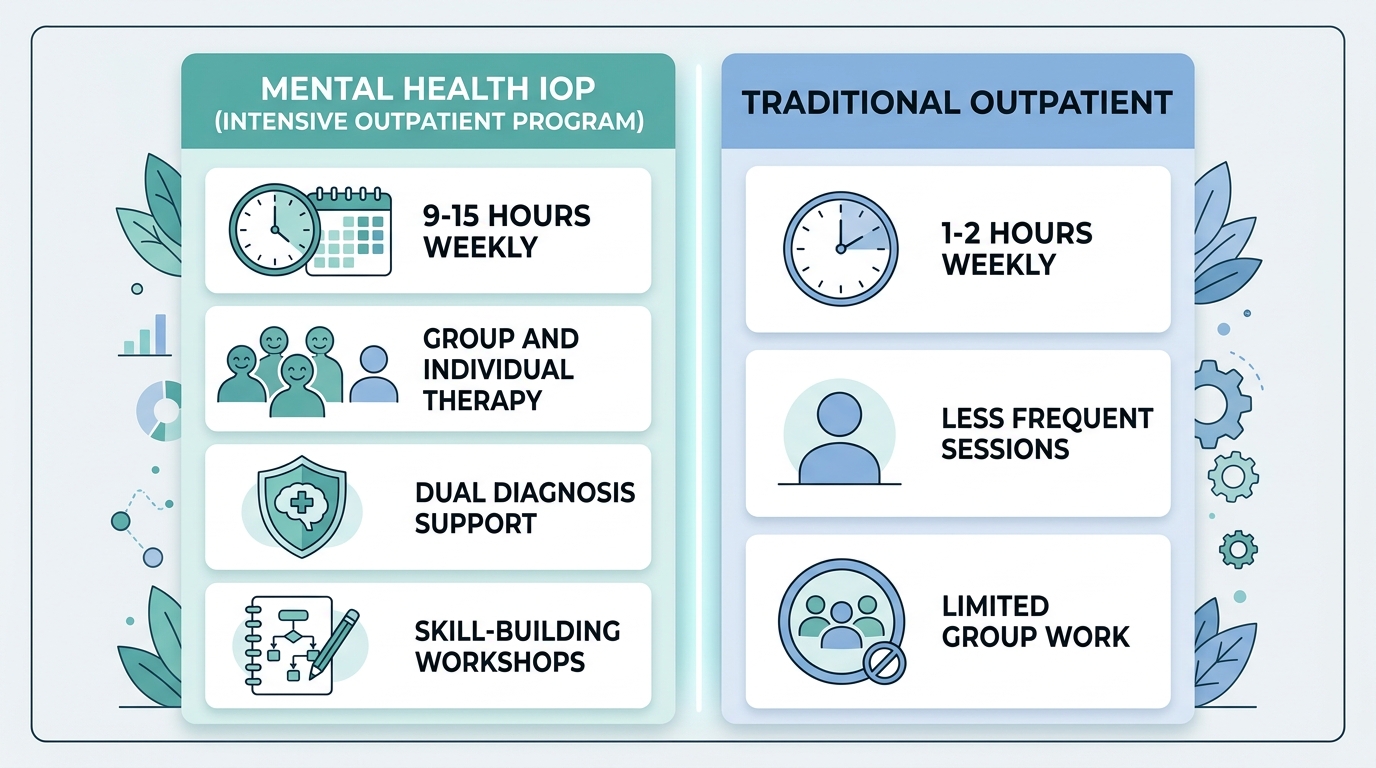
Mental Health IOP vs traditional outpatient therapy comparison
Understanding these differences helps individuals and families determine which level of care aligns with their current needs. IOP bridges the gap effectively, offering meaningful therapeutic engagement without disrupting the routines that provide stability and purpose.
Conditions Treated Through an Intensive Outpatient Program
A mental health IOP is designed to address a broad spectrum of conditions that impair daily functioning but do not necessitate 24-hour medical supervision. Common diagnoses treated through this level of care include:
- Depression and mood disorders, including major depressive disorder and bipolar spectrum conditions
- Anxiety disorders, such as generalized anxiety, social anxiety, and panic disorder
- Post-traumatic stress disorder (PTSD) and trauma-related conditions addressed through modalities like EMDR
- Co-occurring substance use disorders, often referred to as dual diagnosis, where mental health symptoms and substance use interact and require integrated treatment
Our dual diagnosis treatment in Thousand Oaks provides coordinated care that addresses both mental health and substance use challenges concurrently, recognizing that lasting recovery depends on treating the whole person rather than isolated symptoms. Personalized treatment planning ensures each client engages with the therapeutic modalities best suited to their unique clinical presentation.
Typical Weekly Schedule for Mental Health IOP in Thousand Oaks
A structured weekly schedule provides the consistency that promotes meaningful therapeutic progress. Most clients attend programming 3 to 5 days per week, with each day consisting of approximately 3-hour sessions. A typical week may include:
- Group therapy sessions where clients process shared experiences, build interpersonal skills, and receive peer support under clinician facilitation
- Individual counseling focused on personalized goals, trauma processing, and one-on-one therapeutic work
- Psychoeducational skills groups covering topics such as emotional regulation, distress tolerance, relapse prevention, and healthy communication strategies
Sessions are scheduled during daytime or evening hours to accommodate work, school, and family obligations. This flexibility allows individuals to apply newly learned coping skills in real-world settings and return to the program with meaningful insights, reinforcing the therapeutic gains made during structured sessions.
If you are in crisis, call or text 988 (Suicide & Crisis Lifeline) or seek immediate emergency care. The Substance Abuse and Mental Health Services Administration (SAMHSA) also offers a free, confidential, 24/7 helpline for treatment referrals and information. Your recovery journey begins with a single step forward. Let’s take that step together.
Results may vary; individual outcomes depend on clinical circumstances. This information is for educational purposes and is not a substitute for professional medical advice.
Key Benefits of Mental Health IOP for Thousand Oaks Residents
Our Thousand Oaks mental health IOP is designed to deliver comprehensive care while you maintain your daily life. Residents choose our intensive outpatient mental health program for three core reasons: the flexibility to continue working or attending school, integrated dual diagnosis treatment that addresses co-occurring conditions, and robust family involvement paired with aftercare support that fosters lasting recovery.
Flexibility and Continuity of Daily Life
One of the most significant advantages of our IOP mental health program is the ability to receive structured care while living at home. Clients attend scheduled therapy sessions during the day or evening and return to their families each night, preserving the comfort and stability of their home environment. This arrangement eliminates the need for a residential stay and minimizes disruption to personal responsibilities.
Our outpatient therapy in Thousand Oaks allows individuals to continue working, attending classes, or managing family obligations throughout treatment. Practicing newly acquired coping skills in real-world settings accelerates growth and builds lasting confidence. A client might explore stress management techniques in a morning group session and immediately apply those strategies during an afternoon at the office, reinforcing the learning process.
This continuity strengthens recovery by keeping clients connected to their support networks. Participants in our mental health IOP in Thousand Oaks learn to navigate everyday challenges with clinical guidance, creating a smoother transition toward long-term independence.
Dual Diagnosis Treatment for Co-Occurring Disorders
Effective care requires addressing the full picture of a person’s health. Our dual diagnosis treatment in Thousand Oaks provides integrated care for individuals facing both mental health conditions and substance use disorders. According to the Substance Abuse and Mental Health Services Administration (SAMHSA), treating co-occurring conditions simultaneously leads to significantly better outcomes than addressing each issue in isolation.
Our team combines evidence-based therapies including Cognitive Behavioral Therapy, Dialectical Behavior Therapy, and EMDR to target the interconnected nature of anxiety, depression, trauma, and substance use. A person struggling with depression may turn to alcohol as a coping mechanism, and without treating the underlying depression, sustained sobriety remains difficult. Our integrated model ensures both conditions receive equal clinical attention within a single treatment plan.
This approach aligns with SAMHSA guidelines, which emphasize integrated treatment as the standard of care for co-occurring disorders. By delivering coordinated psychiatric support and addiction therapy under one roof, we help clients build a foundation for recovery that addresses root causes rather than surface symptoms alone.
Family Involvement and Aftercare Support
Healing extends beyond the individual to include the entire support system. Our behavioral health services in Thousand Oaks incorporate family therapy sessions that improve communication, rebuild trust, and educate loved ones about mental health and recovery. Families learn to set healthy boundaries and provide constructive support without enabling destructive patterns.
Relapse prevention planning forms the backbone of our aftercare strategy. Each client collaborates with their therapist to identify personal triggers, develop coping strategies, and create a detailed action plan for managing high-risk situations. This proactive approach transforms abstract recovery principles into concrete daily practices that clients can rely on during challenging moments.
Our alumni program offers ongoing connection and community long after treatment concludes. Graduates participate in monthly support groups, social events, and peer mentorship opportunities that reinforce accountability and celebrate milestones. Sustained recovery thrives in community, and our aftercare network provides the encouragement needed to maintain progress over the long term.
Choosing an intensive outpatient program represents a meaningful commitment to personal growth. With flexible scheduling, integrated dual diagnosis care, and comprehensive aftercare support, our clients gain the tools and confidence to build healthier, more fulfilling lives. Results may vary; this information is for educational purposes and is not a substitute for professional medical advice.
The Mental Health IOP Process at Arrive Recovery Center
Here is what you can expect when you begin our program. Our Mental Health IOP process — part of our broader intensive outpatient program Thousand Oaks — is built on three foundational steps designed to guide you toward stability and healing. We believe your recovery journey begins with a single step forward. Let’s take that step together.
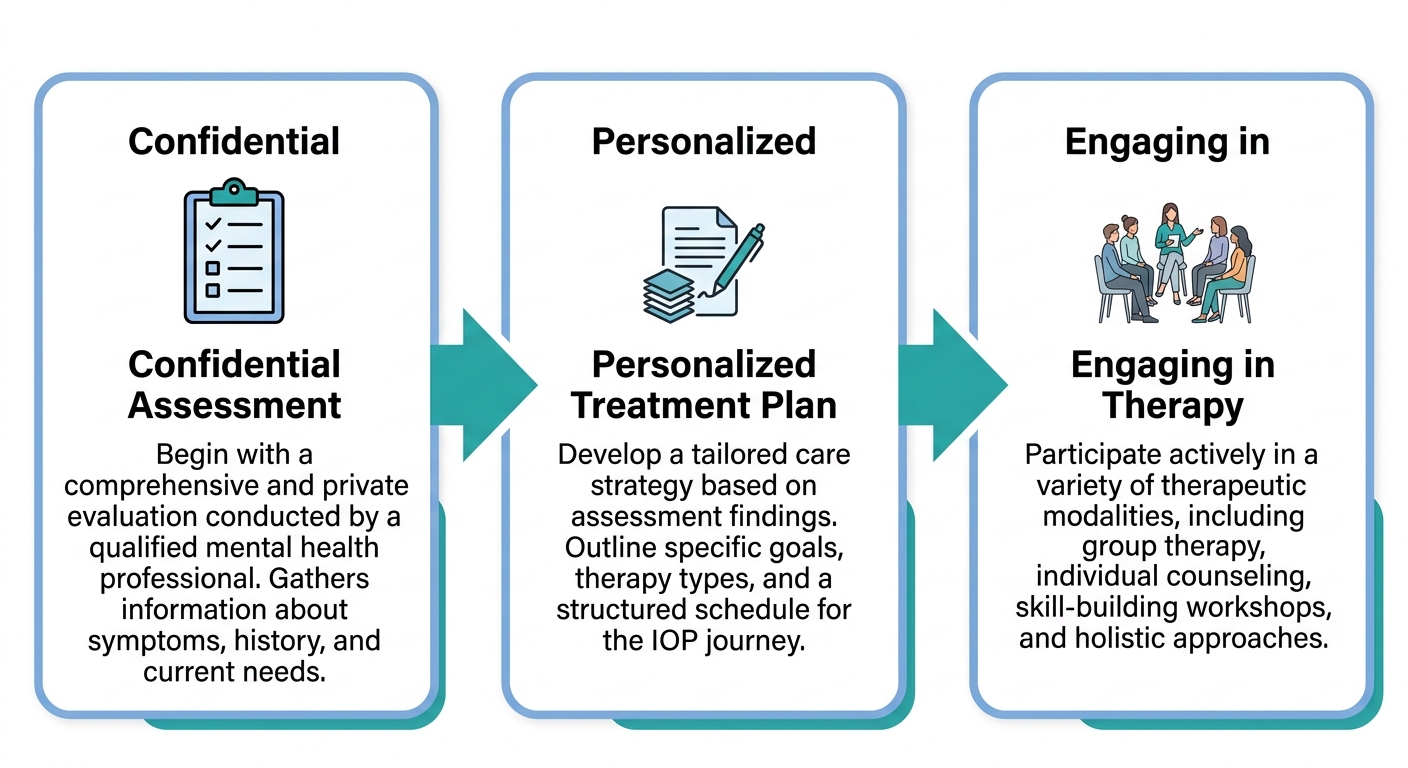
Three-step mental health IOP process overview.
This structured approach ensures that every aspect of your care is tailored to your individual needs, providing the support necessary to navigate the complexities of mental health and co-occurring conditions. From the very first call to ongoing therapy, our team is dedicated to making the process transparent, compassionate, and effective.
Step 1: Confidential Assessment and Insurance Verification
Your journey begins with a confidential phone assessment. A licensed clinician will speak with you to conduct a clinical evaluation, discussing your medical history, current mental health symptoms, and any substance use. Our confidential assessment process follows national best practices; for immediate support, the Substance Abuse and Mental Health Services Administration (SAMHSA)’s National Helpline is also available 24/7.
Concurrently, our administrative staff performs a thorough insurance verification. We will contact your insurance provider to verify your benefits, explain your coverage clearly, and answer any financial questions you may have. This step is crucial for providing clarity and peace of mind, allowing you to focus entirely on what matters most: beginning your recovery. This efficient process ensures timely placement into the right level of care within our behavioral health services in Thousand Oaks.
Step 2: Personalized Treatment Planning
Following the assessment, our clinical team–which includes a psychiatrist, licensed therapists, and a dedicated case manager–collaborates to develop your personalized treatment plan. This plan specifies the therapy modalities that will best address your unique challenges, which may include Cognitive Behavioral Therapy (CBT), Dialectical Behavior Therapy (DBT), EMDR, and motivational interviewing.
Our team also determines the frequency and duration of your sessions, typically ranging from 3 to 5 days per week for approximately 3 hours each day. Crucially, the plan addresses any co-occurring conditions through our dual diagnosis treatment in Thousand Oaks. For clients with co-occurring substance use disorders, our plans may include medication-assisted treatment following SAMHSA guidelines and holistic therapies like yoga, meditation, and art therapy. Every plan is a blueprint for healing, carefully constructed to meet you exactly where you are on your path to wellness.
Step 3: Engaging in Therapy and Building Skills
A typical week in our Mental Health IOP in Thousand Oaks involves a structured and supportive routine. You will participate in 3 to 4 group therapy sessions, which include process groups and psychoeducational workshops. You will also have 1 to 2 individual therapy sessions per week, along with weekly family therapy to foster understanding and strengthen your support system. Optional holistic activities are integrated to promote healing of the whole self.
Within these sessions, our primary focus is on building practical, life-changing skills. You will learn and practice coping strategies, relapse prevention techniques, communication skills, and emotional regulation. This active engagement is the core of the IOP, empowering you to apply these tools in your daily life. This intensive, skill-building approach ensures that our Mental Health IOP provides a robust foundation for lasting recovery.
Every step is designed to support your unique journey–ready to take the next step? Call for a confidential assessment today. Individual results may vary.
Best Practices for a Successful Mental Health IOP Experience in Thousand Oaks
Understanding the structure of intensive outpatient care is only the first step–here are the practices that make the experience truly effective. For those seeking a mental health IOP in Thousand Oaks, success hinges on three core commitments: consistent attendance, active relationship-building, and thoughtful aftercare planning.
Commit to Consistency and Active Participation
We recommend attending every scheduled session–typically three to five per week–to build and sustain therapeutic momentum. Showing up on time and prepared sends a powerful signal to yourself and your peers: your recovery matters. Research consistently links regular attendance in structured outpatient care with improved long-term outcomes, as each session reinforces the skills taught in the one before it.
Active engagement in group therapy transforms the experience from passive observation into genuine healing. Share your personal insights, offer honest feedback to others, and complete the journaling or worksheet assignments your therapist provides. These tasks are designed to deepen your self-awareness and help you identify emotional patterns that surface between sessions–an insight our behavioral health services in Thousand Oaks clinicians help you unpack in real time.
Build a Support Network and Involve Family
Healing happens in connection, not isolation. Our family therapy sessions are a core component of the intensive outpatient program for mental health, designed to rebuild trust, improve communication, and educate loved ones about what you are experiencing. When families heal together, the home environment becomes a source of stability rather than stress.
Peer support within your IOP group offers another layer of accountability and understanding. The men and women sitting beside you each session are walking a similar path, and their perspectives often spark breakthroughs. We also encourage you to connect with our bi-weekly alumni support groups right here in Thousand Oaks, where graduates of the program share encouragement and practical coping strategies that sustain motivation long after discharge. For individuals navigating co-occurring conditions, our dual diagnosis treatment in Thousand Oaks addresses anxiety, depression, or trauma alongside any substance use concerns, which research shows can significantly improve IOP effectiveness.
Plan for Aftercare and Relapse Prevention
A successful transition out of IOP requires a written plan. We guide every client in creating a personalized relapse prevention document that identifies personal triggers, lists healthy coping strategies, and includes emergency contacts–starting with the SAMHSA National Helpline at 1-800-662-4357, a free, confidential, 24/7 resource for crisis support and treatment referrals. Having a concrete plan reduces uncertainty and gives you a roadmap to follow when challenges arise.
The step-down process from IOP to once-weekly outpatient counseling typically unfolds over four to six weeks, allowing you to practice new skills with a gradually loosening safety net. During this phase, daily mindfulness practice or journaling helps you track emotional fluctuations and catch warning signs early. For more comprehensive advice, see our guide on choosing an iop program Thousand Oaks to ensure your aftercare aligns with your long-term goals.
With these strategies in place, you can move forward with confidence. Your recovery journey begins with a single step forward. Let’s take that step together. Ready to begin? Call for a confidential assessment.
This information is for educational purposes and is not a substitute for professional medical advice.
Begin Your Recovery Journey with Mental Health IOP in Thousand Oaks
Our Mental Health IOP in Thousand Oaks offers a structured, evidence-based outpatient program designed to support your healing while you remain at home. Through individual, group, and family therapy sessions multiple times each week, we provide comprehensive care tailored to your unique circumstances. This program is Joint Commission-accredited, ensuring the highest standards of treatment.
For those balancing recovery with daily responsibilities, our dual diagnosis treatment in Thousand Oaks addresses co-occurring mental health and substance use disorders through integrated clinical modalities including CBT, DBT, and EMDR. Our behavioral health services in Thousand Oaks extend throughout the region, and for individuals in neighboring communities, our san fernando valley outpatient rehab offers similar comprehensive care. We are proud to serve our community with services available in both English and Spanish.
“Your recovery journey begins with a single step forward. Let’s take that step together.” Call (805) 303-5953 for a confidential assessment. For immediate crisis support, the Substance Abuse and Mental Health Services Administration (SAMHSA) provides a free, 24/7 helpline at 1-800-662-HELP (4357). Disclaimer: Results may vary; individual outcomes depend on clinical circumstances. This information is for educational purposes and is not a substitute for professional medical advice. If you are in crisis, call or text 988 or seek immediate emergency care.
Resources
Find Medication-Assisted Treatment Resources from SAMHSA
Thousand Oaks
CA
91362

