Table of Contents
IOP Program in Thousand Oaks, California
Our iop program thousand oaks provides structured, evidence-based support for clients who require significant therapeutic care while continuing to live at home or in a sober living residence. We designed this intensive outpatient program to serve the Ventura County and greater Los Angeles areas from our Thousand Oaks location.
Each week, clients engage in individual and group therapy sessions grounded in cognitive behavioral therapy (CBT) and dialectical behavior therapy (DBT). We integrate family therapy, relapse prevention education, and holistic modalities such as yoga, meditation, and art therapy. Because we address co-occurring conditions, dual diagnosis treatment thousand oaks is woven directly into clinical care plans. This approach allows us to treat substance use disorders and underlying mental health conditions simultaneously.
The typical IOP lasts eight to twelve weeks, with flexible scheduling options that let clients attend work, school, or family obligations. As an outpatient drug rehab thousand oaks option, the program bridges the gap between residential or partial hospitalization and full independence.
Begin Your Journey to Wellness. Call Arrive Recovery Center for a confidential assessment.
Disclaimer: Results may vary; individual outcomes depend on clinical circumstances. This information is for educational purposes and is not a substitute for professional medical advice. If you are in crisis, call or text 988 or contact the Substance Abuse and Mental Health Services Administration (SAMHSA) National Helpline.
Understanding IOP and Dual Diagnosis Treatment in Thousand Oaks
An Intensive Outpatient Program offers a structured treatment experience with the flexibility to live at home. Understanding how our intensive outpatient treatment in Thousand Oaks functions can help you determine if this level of care is appropriate for your circumstances or those of a loved one. Learn more about our intensive outpatient treatment Thousand Oaks.
We designed this program to accommodate work, school, and family responsibilities while providing comprehensive clinical support.
IOP vs. Residential and PHP: Choosing the Right Level of Care
Selecting the right treatment intensity often begins with understanding the differences between an IOP, a Partial Hospitalization Program, and residential care. An IOP program in Thousand Oaks typically requires 9 to 20 hours of therapy per week, offering more flexibility than the 20+ hours required by a PHP or the 24/7 supervised structure of residential treatment. This makes an outpatient drug rehab in Thousand Oaks suitable for individuals who have completed detox or a higher level of care, or for those with a less severe addiction who still need structured support.
Residential treatment involves living full-time at a facility, while a PHP serves as a full-day program, often acting as a step-down from inpatient care. Both provide a higher degree of structure than an IOP. Our program allows clients to practice coping skills in real-world settings while maintaining employment or attending school. The Substance Abuse and Mental Health Services Administration (SAMHSA) offers a free, confidential national helpline at 1-800-662-HELP for individuals exploring treatment options, providing an additional layer of guidance for families making these decisions.
Integrating Dual Diagnosis Treatment for Co-Occurring Disorders
Effective addiction treatment must address the whole person. Many individuals facing substance use challenges also live with co-occurring mental health conditions like anxiety, depression, or trauma. Our dual diagnosis treatment in Thousand Oaks integrates care for both conditions simultaneously, rather than treating them as separate issues.
We use evidence-based therapies such as Cognitive Behavioral Therapy, Dialectical Behavior Therapy, and Eye Movement Desensitization and Reprocessing to address the complex interplay between mental health and substance use. By treating the underlying psychological drivers of addiction, we help clients build a more stable foundation for long-term recovery. This integrated model acknowledges that sustainable sobriety involves healing from disordered substance use and managing mental health symptoms effectively, an approach supported by government resources like the SAMHSA treatment locator, which connects individuals with integrated care providers nationwide.
A Typical Day in IOP: Therapy, Groups, and Flexibility
Maintaining work or school commitments while attending treatment is a core component of our IOP program in Thousand Oaks. We schedule sessions during the morning and evening to support your existing obligations. A typical day includes several therapeutic elements designed to foster healing and self-discovery:
- Morning Group Therapy: The day often starts with a process group or psychoeducation session, allowing clients to share experiences and learn about addiction and coping mechanisms in a safe peer environment.
- Individual Counseling: One-on-one sessions with a licensed therapist focus on personal goals, trauma processing, and relapse prevention planning.
- Wellness Break: A designated lunch period provides time to recharge and practice social skills with peers.
- Holistic Afternoon Activities: Sessions may include yoga, meditation, or art therapy, introducing non-verbal methods for stress reduction and emotional regulation.
- Family and Evening Support: Evening programming can involve family therapy sessions or facilitated 12-step meetings, creating a comprehensive circle of support that extends beyond the treatment center.
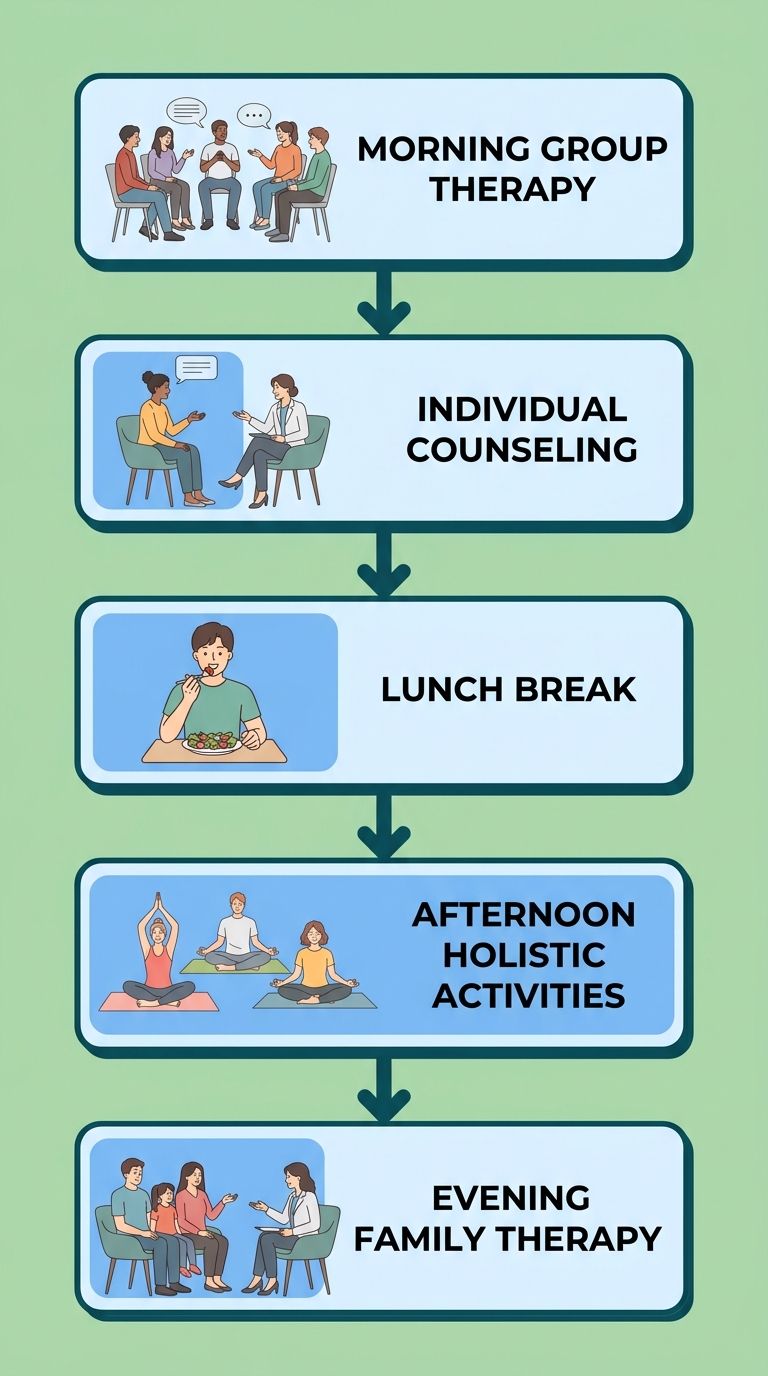
Daily schedule for Intensive Outpatient Program at Arrive Recovery Center
This balanced schedule of structured therapy and personal flexibility is designed so that you need not choose between your recovery and your daily life. We aim to provide the tools and support necessary for healing through an intensive outpatient program that adapts to you. Remember, individual outcomes vary, and information provided is for educational purposes and is not a substitute for professional medical advice. If you are in crisis, please call or text 988.
With this foundation in treatment levels and daily life in an IOP, the path to a sustainable recovery becomes clearer. Your recovery journey begins with a single step forward. Let’s take that step together.
Benefits of Choosing an IOP Program at Arrive Recovery Center
When choosing iop program thousand oaks, understanding the real-world advantages of an intensive outpatient program is essential. Our iop program thousand oaks provides a structured yet flexible path to recovery, and here we’ll outline three core benefits that set our program apart.
Flexibility to Maintain Work, School, and Family Commitments
Our IOP is designed for adults who need effective treatment but cannot pause their daily lives. We offer evening sessions so clients can attend 9-12 hours of therapy each week while keeping up with work, school, or family responsibilities. For working professionals in Ventura County, our evening outpatient rehab options make it feasible to receive high-quality care without leaving the workplace. As an outpatient drug rehab thousand oaks residents rely on, we understand that preserving vocational and educational stability strengthens the recovery process. We also coordinate scheduling with employers and schools when appropriate to minimize disruption and better support consistent attendance over time.
Evidence-Based Modalities and Personalized Care
The foundation of our IOP is a personalized treatment plan built on proven clinical modalities. We integrate Cognitive Behavioral Therapy (CBT), Dialectical Behavior Therapy (DBT), and Eye Movement Desensitization and Reprocessing (EMDR) to address both substance use and underlying mental health conditions. As a provider of dual diagnosis treatment thousand oaks trusts, we treat co-occurring disorders simultaneously using integrated approaches aligned with the American Society of Addiction Medicine (ASAM) Criteria. Each week, clients participate in individual therapy sessions tailored to their specific needs, ensuring that the most appropriate evidence-based techniques are applied to support lasting change. Our assessments guide which modalities are prioritized for each client based on need and goals.
Family Involvement and Aftercare Planning
Recovery extends beyond the individual, which is why family therapy is woven into our IOP. We host regular family sessions to rebuild trust, improve communication, and educate loved ones about the recovery journey. Meanwhile, aftercare planning begins early–our team collaborates with each client to develop a relapse prevention strategy, connect with our alumni network, and arrange sober living referrals when needed. This continuum of care, grounded in the ASAM Criteria for patient placement, helps ensure a smooth transition from structured outpatient treatment to independent, sustained wellness. Individual outcomes vary based on clinical circumstances. We engage loved ones in practical relapse prevention and community resource connections. Our Joint Commission accreditation and broad insurance acceptance further support your journey.
Your recovery journey begins with a single step forward. Begin Your Journey to Wellness and take that first step toward a healthier future.
How an IOP Program Works at Arrive Recovery Center: From Assessment to Aftercare
Embarking on the recovery journey begins with understanding the practical steps involved, and our team is here to guide you through every phase universe. For those seeking a structured yet flexible path, our drug rehab thousand oaks program is designed to fit your life. A key offering is our intensive outpatient program near Thousand Oaks, which provides a comprehensive treatment experience without requiring a residential stay. Let’s walk through the exact steps of our program, from your first confidential call to the robust support that follows.
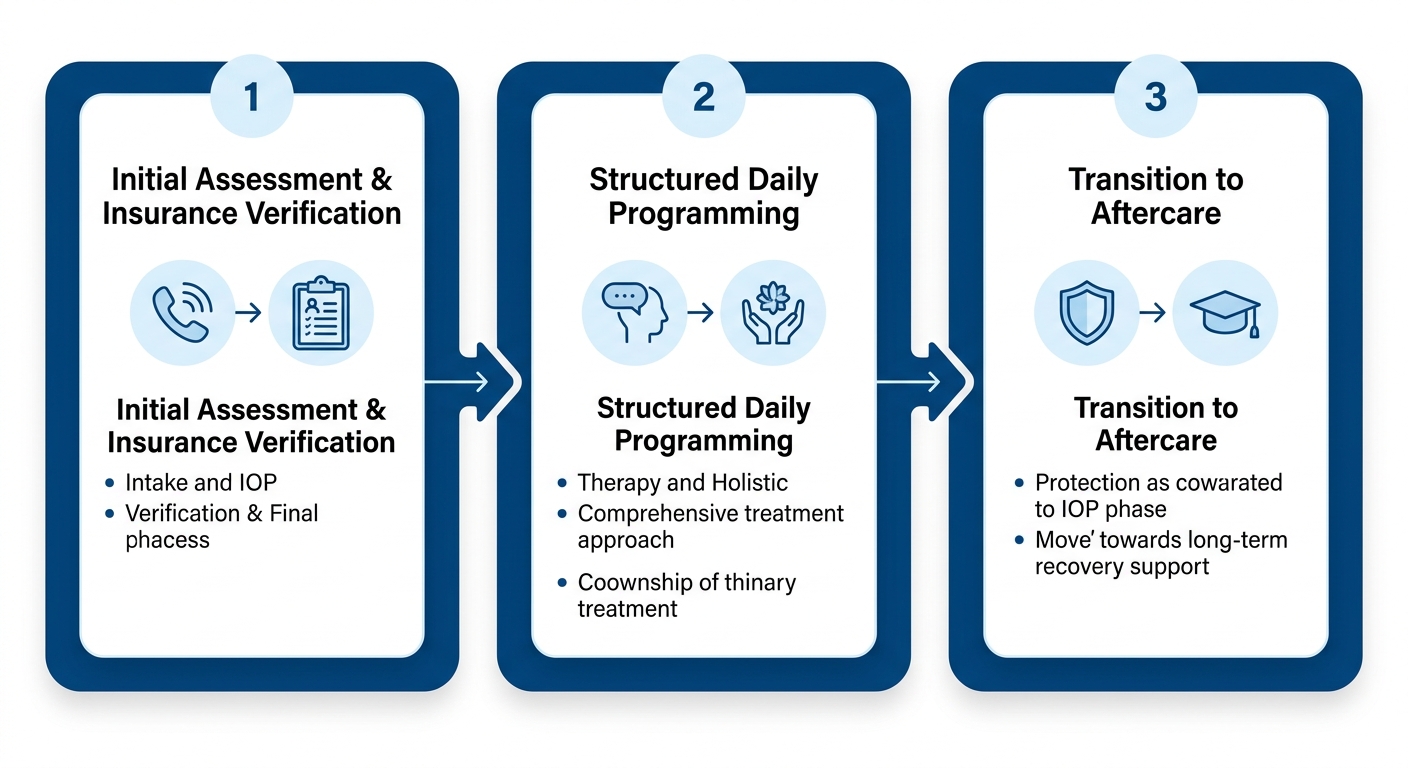
IOP program flow from assessment to aftercare
Initial Assessment and Insurance Verification
Your journey with our IOP in Thousand Oaks starts with a single, confidential telephone call. During this no-obligation assessment, a member of our admissions team will speak with you about your unique substance use history, any co-occurring mental health concerns, and your personal treatment goals. This same call serves a practical purpose, as we immediately begin the process of verifying your PPO insurance benefits. Our team handles the communication with your provider to determine coverage, so you know exactly what your plan entails before admission. This efficient process directly answers your questions about how insurance can cover an IOP in Thousand Oaks and ensures there are no financial surprises as you move forward.
The Daily Schedule: Group Therapy, Individual Counseling, and Holistic Activities
A typical week in our iop program thousand oaks involves attending programming for three to five days, allowing clients to maintain their work, school, or family commitments. Each program day includes approximately three to four hours of structured therapeutic activities. A significant portion of this time is dedicated to group therapy, where you will engage in process groups, psychoeducation, and relapse prevention skill-building alongside peers. This is complemented by one weekly individual counseling session, where you work one-on-one with a licensed therapist using evidence-based modalities such as Cognitive Behavioral Therapy (CBT) and Dialectical Behavior Therapy (DBT) to address your specific needs. Results may vary; individual outcomes depend on clinical circumstances.
To support healing of the whole person, our daily schedule also integrates holistic activities like yoga, meditation, or art therapy. These practices provide essential tools for managing stress and building a balanced lifestyle in recovery. Sunday is a dedicated day of rest, giving you the space to recharge and integrate the week’s work.
Duration and Transition to Aftercare
The typical duration of an IOP at our center ranges from 8 to 12 weeks, though the exact length depends on your clinical progress and individual needs. Throughout the program, we use our dual diagnosis treatment thousand oaks approach, concurrently addressing any co-occurring mental health conditions with your substance use. The timeline is only extended if it is clinically necessary to ensure your stability. Our team continuously reassesses your progress, per the ASAM Criteria, to ensure you are in the appropriate level of care.
As you near the completion of IOP, we work with you to create a structured transition plan. Often, this involves stepping down to a less intensive outpatient drug rehab thousand oaks phase or, for those who need a supportive living environment, transitioning into one of our sober living homes paired with our robust alumni aftercare program. After completing IOP, clients often step down to our outpatient program or transition into our sober living and alumni support network. Call us today to discuss your needs. Begin Your Journey to Wellness.
Best Practices for a Successful IOP Experience in Thousand Oaks
To make the most of your IOP experience in Thousand Oaks, it helps to follow a few best practices. Choosing the right iop program thousand oaks residents trust is the first step on this important journey. An intensive outpatient program provides structured therapy while allowing you to live at home — a key difference from residential care, where you stay at a facility 24/7. We believe that when you approach treatment with preparation and an open mind, you set the stage for meaningful, lasting change.
Questions to Ask Before Choosing an IOP Program
Asking the right questions helps you choose an IOP that truly fits your needs. Understanding what to look for in outpatient drug rehab thousand oaks providers can bring clarity during a stressful time. We recommend inquiring about the following:
- What is the difference between outpatient drug rehab and a residential stay? Intensive outpatient programs allow you to live at home and attend treatment sessions several hours per day, while residential treatment requires you to stay at a facility full-time. IOP is often a step-down from inpatient care or an option for those with a stable home environment.
- Does outpatient rehab include case management and recovery coaching? Yes, many comprehensive IOPs — including ours — offer case management and recovery coaching as part of a complete treatment plan. These services help you address practical needs such as employment, housing, and legal concerns while building accountability.
- Is the program accredited by a recognized body such as The Joint Commission? Accreditation signals that a facility meets rigorous, industry-standard quality and safety criteria, such as those outlined by the American Society of Addiction Medicine (ASAM).
- Does the clinical team have expertise in dual diagnosis treatment thousand oaks? Co-occurring mental health conditions must be treated alongside substance use for effective recovery.
- What insurance plans are accepted, and can the admissions team provide a confidential benefit verification? Clear financial information helps reduce stress before treatment begins.
Preparing for a Successful IOP Experience
Once you select an IOP program, preparation can significantly improve your experience. Many individuals find success when they commit fully to the process, though results always depend on individual clinical circumstances and the strength of your support systems.
We suggest the following practical steps:
- Set a consistent daily schedule that makes time for therapy sessions, work, family, and self-care. Routine creates stability.
- Arrange reliable transportation well in advance so that travel never becomes a barrier to attending treatment.
- Communicate openly with your employer and family about your treatment commitments. Their understanding provides the space you need to focus on healing without external pressure.
- Engage actively in all therapy sessions — complete assignments between groups, speak honestly with your counselors, and ask questions whenever you feel uncertain.
- Approach all modalities with curiosity. Whether you participate in Cognitive Behavioral Therapy, Dialectical Behavior Therapy, or trauma-focused work such as EMDR, your presence and attention deepen the work.
Building a Support Network for Long-Term Recovery
Recovery does not happen in isolation. A strong support network reinforces the skills you learn during treatment and helps you navigate challenges once the program ends. For those living throughout the broader region, Arrive Recovery Center also provides san fernando valley rehab services for individuals seeking care outside Thousand Oaks.
To build a durable foundation for lasting wellness:
- Involve family members in therapy sessions when clinically appropriate. Family education and participation strengthen communication and rebuild trust.
- Join our alumni support program. Connecting with peers who have completed treatment offers encouragement and shared understanding during difficult moments.
- Connect with community resources in Thousand Oaks, including 12-step meetings, SMART Recovery groups, and local wellness activities. These networks provide ongoing accountability and connection.
- Work with professionals trained in integrated care. A team that understands co-occurring disorders can coordinate support for both mental health and substance use needs, creating a unified treatment experience rather than treating the conditions separately.
A recovery-friendly environment makes a difference. When you surround yourself with people and resources aligned with your goals, you reinforce the progress you make every day. Begin Your Journey to Wellness by assembling the support you deserve — because recovery is a collaborative process that flourishes with connection and commitment. With these best practices in mind, you are ready to explore the specific programs we offer.
Results may vary; individual outcomes depend on clinical circumstances. If you are in crisis, call or text 988 (Suicide & Crisis Lifeline) or seek immediate emergency care. This information is for educational purposes and is not a substitute for professional medical advice; consult a healthcare professional for diagnosis and treatment.
Begin Your Recovery Journey with Arrive Recovery Center
Begin Your Journey to Wellness with Arrive Recovery Center. Our IOP program in Thousand Oaks provides a structured, supportive path to healing, designed for individuals who need intensive treatment while maintaining daily responsibilities. We offer flexible scheduling so clients can maintain daily responsibilities.
We offer a full continuum of outpatient care, including Partial Hospitalization, outpatient drug rehab in Thousand Oaks, and a dedicated mental health IOP Thousand Oaks for co-occurring conditions. Each plan is personalized, backed by Joint Commission accreditation, broad insurance acceptance, and bilingual services. Our dual diagnosis treatment in Thousand Oaks addresses both mental health and substance use disorders with compassion and expertise. Our licensed clinicians and recovery coaches collaborate to tailor individualized plans and aftercare support for clients.
Guided by the ASAM Criteria, we ensure you receive the appropriate level of care from day one. The SAMHSA National Helpline at 1-800-662-HELP offers immediate, confidential support 24/7. We follow ASAM-guided assessments and regularly monitor progress to adapt care over time safely. Your recovery journey begins with a single step forward. Let’s take that step together. Call for Confidential Assessment.
Resources
Access ASAM Criteria Fourth Edition for Treatment Placement
Thousand Oaks
CA
91362

