Table of Contents
Alcohol Rehab in Thousand Oaks, California: Your Guide to Recovery Options
Finding effective alcohol rehab in Thousand Oaks is a critical step toward lasting wellness, and we at Arrive Recovery Center are here to guide you. If you are searching for thousand oaks addiction treatment, we encourage you to learn more about our philosophy and our personalized approach to care. We provide a supportive, evidence-based environment right here in the community, making professional help accessible and convenient.
Our center offers a flexible range of outpatient services tailored to fit your life. These include a structured Partial Hospitalization Program (PHP) and an intensive outpatient program for those balancing recovery with work or family commitments. We also specialize in dual diagnosis treatment, addressing co-occurring mental health conditions alongside alcohol use to support a more complete and sustainable recovery.
To explore all your options, trusted government resources are available. The Substance Abuse and Mental Health Services Administration (SAMHSA) offers a confidential online tool at findtreatment.gov to search for licensed facilities. You can also call the SAMHSA National Helpline at 1-800-662-HELP for 24/7, free support and referrals.
Your recovery journey begins with a single step forward. Let’s take that step together in a place where hope transforms into action.
Understanding Alcohol Rehab in Thousand Oaks: Levels of Care and Dual Diagnosis
Choosing the right treatment path is a critical first step in recovery. At Arrive Recovery Center, we offer a full continuum of outpatient care for alcohol rehab in Thousand Oaks, designed to meet individuals where they are in their journey. Understanding the differences between our programs helps you or your loved one make an informed decision about which level of support is most appropriate.
Continuum of Outpatient Care: PHP, IOP, and Outpatient Services
Our outpatient programs are structured to provide increasing levels of independence as clinical stability improves. Each phase of care addresses different needs, from intensive daily support to flexible, maintenance-focused counseling.
- Partial Hospitalization Program (PHP): This is our most structured outpatient offering, ideal for early recovery or those requiring a high level of support to prevent relapse. Clients participate in 5-7 hours of therapy daily, 5 days a week. Programming includes individual therapy, group counseling, and holistic activities, all delivered in a controlled, therapeutic environment while allowing the client to return home or to a sober living residence in the evening.
- Intensive Outpatient Program (IOP): Serving as a step-down from PHP, our intensive outpatient program provides a robust therapeutic framework with greater flexibility for work, school, or family obligations. Clients typically attend 3-4 hours of programming per day, 3 to 5 days a week. An IOP for alcohol recovery maintains a strong focus on relapse prevention and coping skill development while encouraging the client to practice these new skills in real-world settings.
- Outpatient Program (OP): Standard outpatient counseling is the least intensive level of formal care, best suited for individuals who have achieved clinical stability and are focused on long-term maintenance. The schedule is typically reduced to 1-2 therapy sessions per week, concentrating on relapse prevention, managing life stressors, and reinforcing a healthy, sober lifestyle.
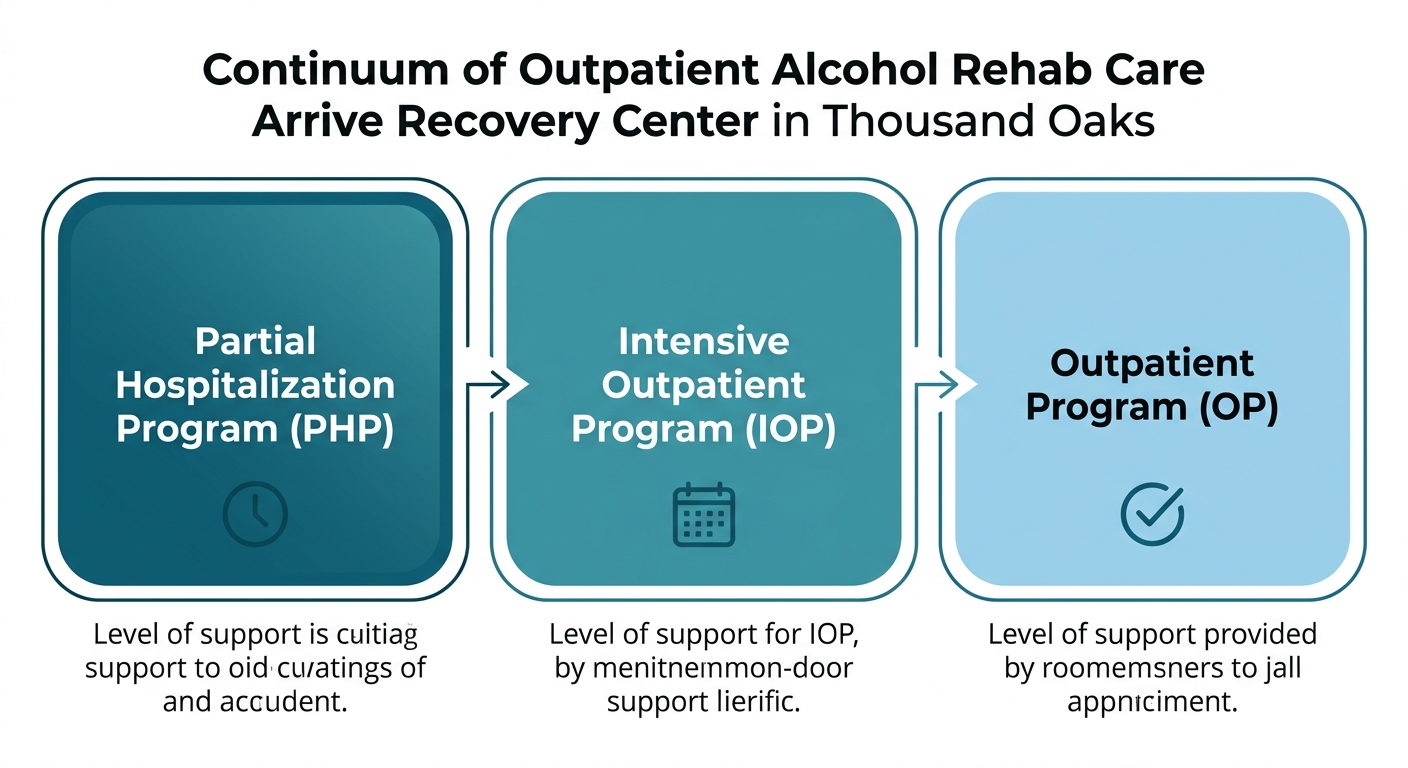
Outpatient alcohol rehab continuum at Arrive Recovery Center: PHP, IOP, and OP levels of care.
This step-down model ensures a smooth transition through recovery, with the intensity of treatment decreasing only when clinical milestones indicate readiness for a less restrictive environment.
The Role of Dual Diagnosis in Alcohol Recovery
Effective treatment often requires addressing more than just the substance use. Dual diagnosis treatment refers to the integrated approach of treating co-occurring substance use and mental health disorders simultaneously. Conditions like depression, anxiety, bipolar disorder, and PTSD frequently underlie or are exacerbated by alcohol addiction.
We do not treat these conditions sequentially. Our clinical team addresses both the alcohol use disorder and the co-occurring condition at the same time, recognizing that each fuels the other. This integrated dual diagnosis approach is vital for sustainable recovery because it resolves the root psychological or emotional triggers that can lead to relapse, rather than just ceasing alcohol use. The Substance Abuse and Mental Health Services Administration (SAMHSA) emphasizes that comprehensive care must address the whole person, a principle that guides every treatment plan we create.
Why Location Matters: Alcohol Rehab in Thousand Oaks Near 91362
Engaging in an alcohol rehab thousand oaks program offers distinct practical advantages. Being located near the 91362 zip code means families can remain actively involved in the healing process, a component we view as essential to long-term success. Our local presence also provides seamless coordination with a network of community resources, including reputable sober living homes and diverse support groups throughout Ventura County. If you are ready to begin your journey to wellness by finding a program that fits your life, you can call us for a confidential assessment. For additional verification of available services, you can use a government resource like the Substance Abuse and Mental Health Services Administrationu2019s (SAMHSA) treatment locator or dial their National Helpline at 1-800-662-HELP (4357), a free, 24/7 confidential support service in English and Spanish.
This information is for educational purposes and is not a substitute for professional medical advice. Results may vary, and individual outcomes depend on clinical circumstances. If you are in crisis, call or text 988 or seek immediate emergency care.
Benefits of Personalized Outpatient Alcohol Rehab in Thousand Oaks
Our outpatient addiction treatment Thousand Oaks program is designed to provide effective, evidence-based care while allowing you to maintain your daily responsibilities. For many individuals seeking alcohol rehab Thousand Oaks, the flexibility of an intensive outpatient program offers a practical path to recovery without the disruption of residential treatment. At Arrive Recovery Center, we tailor every aspect of your care plan to address your unique clinical needs, personal goals, and life circumstances.
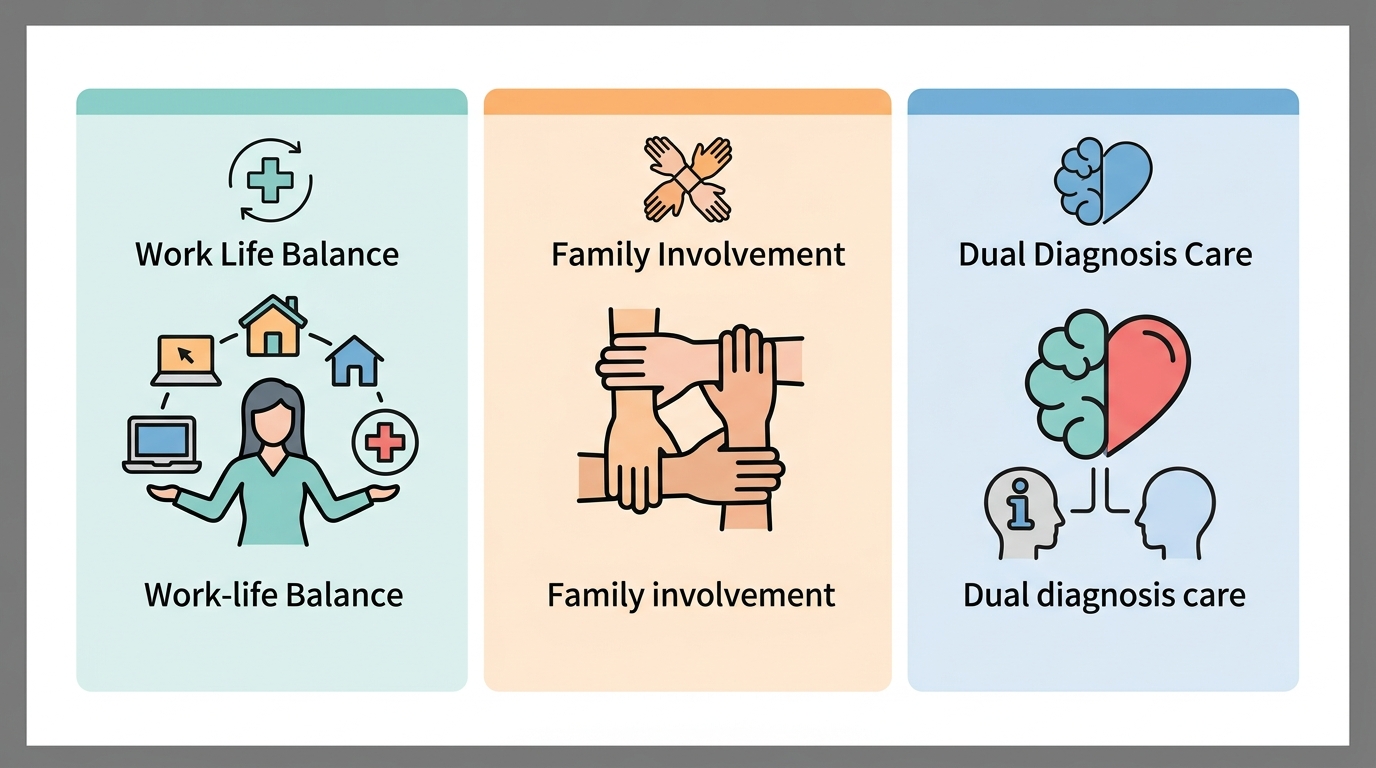
Benefits of personalized outpatient alcohol rehab in Thousand Oaks
Flexibility and Continuity: IOP vs. Residential Rehab
Choosing between an intensive outpatient program and inpatient care is a significant decision. Residential treatment requires individuals to live at a facility for the duration of their program, which can span 30 to 90 days or longer. While this immersive approach benefits some, it often means stepping away from employment, academic pursuits, and family obligations. Our intensive outpatient program offers a structured alternative that allows you to live at home while receiving comprehensive therapeutic support.
IOP typically involves 9 to 20 hours of weekly therapy, striking a balance between rigorous clinical care and real-world application. This model enables clients to practice newly acquired coping skills in their daily environments immediately, reinforcing recovery behaviors in real time. You can continue working, attend school, and be present for your family while participating in individual counseling, group therapy, and psychoeducational sessions. The Substance Abuse and Mental Health Services Administration (SAMHSA) provides a confidential treatment locator at FindTreatment.gov, which helps individuals identify accredited outpatient programs that meet established standards of care. For those needing step-down support after residential treatment or those whose clinical presentation does not necessitate 24-hour supervision, IOP represents a flexible, effective option for outpatient alcohol treatment.
Family Involvement as a Pillar of Recovery
Addiction affects the entire family system, not just the individual struggling with substance use. Our personalized rehab program recognizes this reality and integrates family therapy as a core component of the treatment process. Family sessions are designed to improve communication, rebuild trust, and educate loved ones about the nature of addiction and the recovery journey.
Research consistently demonstrates that family involvement strengthens treatment outcomes. When family members understand addiction as a chronic brain disease rather than a moral failing, they become powerful allies in the recovery process. Inclusive family therapy can increase treatment retention and significantly reduce relapse rates by creating a supportive home environment. Through structured sessions, families learn to identify enabling behaviors, establish healthy boundaries, and develop effective conflict resolution skills. This family-centered recovery approach ensures that healing extends beyond the individual, fostering a network of support that endures long after the formal program concludes. SAMHSA emphasizes that recovery support systems u2014 including family, peers, and community resources u2014 are essential for sustained wellness.
Long-Term Success Through Dual Diagnosis Care
Sustainable recovery often requires addressing more than substance use alone. Many individuals with alcohol use disorders also experience co-occurring mental health conditions such as depression, anxiety, post-traumatic stress disorder, or bipolar disorder. Our dual diagnosis treatment approach provides integrated care that treats both conditions simultaneously rather than sequentially.
Evidence strongly supports the effectiveness of integrated dual diagnosis programs. Treating substance use and mental health conditions separately often leads to fragmented care and poorer outcomes, as the untreated condition can trigger relapse. When both disorders are addressed within a coordinated treatment framework, clients experience improved symptom management, reduced hospitalization rates, and stronger long-term recovery outcomes. At Arrive Recovery Center, our clinical team employs modalities including Cognitive Behavioral Therapy (CBT), Dialectical Behavior Therapy (DBT), and Eye Movement Desensitization and Reprocessing (EMDR) to address the complex interplay between addiction and mental health. SAMHSA identifies integrated care as a best practice, noting that comprehensive programs produce measurably better results than treating each condition in isolation.
This information is for educational purposes and is not a substitute for professional medical advice; consult a healthcare professional for diagnosis and treatment. Results may vary; individual outcomes depend on clinical circumstances. Your recovery journey begins with a single step forward. We invite you to contact our team for a confidential assessment to explore how our personalized outpatient program can support your path to lasting wellness. If you are in crisis call or text 988 (Suicide & Crisis Lifeline) or seek immediate emergency care.
How Alcohol Rehab Works at Arrive Recovery Center: Therapies, Duration, and Scheduling
Now that you understand the importance of seeking help, letu2019s explore exactly how our alcohol rehab program works at Arrive Recovery Center. Our intensive outpatient program in Thousand Oaks is a structured yet flexible path designed for individuals with alcohol use disorder who do not require 24-hour supervision. Your recovery journey begins with a single step forward, and we are here to guide you through a comprehensive treatment process that includes evidence-based care, a manageable schedule, and a straightforward admission process.
Evidence-Based Therapies for Alcohol Recovery
Our alcohol rehab program at arrive recovery center thousand oaks begins with a thorough understanding of your unique needs, integrating proven therapeutic modalities to address the psychological roots of addiction. We utilize Eye Movement Desensitization and Reprocessing (EMDR) to help clients process unresolved trauma that often underlies substance use, reducing its emotional charge and breaking the cycle of self-medication. Cognitive Behavioral Therapy (CBT) empowers you to identify and reframe negative thought patterns, while Dialectical Behavior Therapy (DBT) builds crucial skills in emotional regulation and distress tolerance.
Motivational Interviewing serves as a collaborative tool to strengthen your internal drive for change, making the recovery process feel like a personal choice rather than an obligation. Because trauma is frequently intertwined with alcohol addiction, our trauma therapy sessions provide a safe space to heal past wounds. This comprehensive approach to alcohol rehab thousand oaks ensures that both the addiction and any co-occurring mental health conditions are treated simultaneously, a hallmark of effective dual diagnosis treatment.
Typical Duration and Weekly Schedule of an IOP
Our intensive outpatient program is designed with your life commitments in mind, allowing you to receive high-quality care for alcohol rehab thousand oaks without putting your career or education on hold. The typical IOP at Arrive Recovery Center lasts between 8 to 12 weeks, providing enough time to establish a solid foundation for recovery while transitioning back to daily life. Clients attend sessions 3 to 5 days per week, with each session lasting approximately 3 hours.
This schedule is intentionally structured to accommodate work or school, with morning and evening program options available so you can seek treatment for an alcohol use disorder and still meet your daytime responsibilities. Our intensive outpatient program combines group therapy, individual counseling, and educational sessions during these blocks, ensuring every moment is focused on building coping skills and a strong support network. This level of care is ideal for those stepping down from a higher level of treatment or who need more structure than traditional outpatient counseling.
Insurance Coverage and Admission Process
Taking the first step toward recovery begins with a simple, confidential phone call. Our admission process for dual diagnosis treatment is designed to be stress-free, starting with a free, confidential insurance benefit check. We accept most major commercial insurers and will work with you to verify your PPO or HMO benefits for alcohol addiction treatment in Thousand Oaks, allowing you to focus on healing rather than paperwork. Results may vary; individual outcomes depend on clinical circumstances.
The process is straightforward: you call us for a confidential assessment, our team completes a brief pre-screening to understand your needs, we verify your insurance coverage, and then you begin your personalized intensive outpatient program. There are no hidden fees or confusing steps. According to the SAMHSA National Helpline, resources are available nationwide, but our local Ventura County team provides a direct, hands-on approach for those we serve in the greater Los Angeles area. Call for Confidential Assessment and Begin Your Journey to Wellness. Hablamos Espau00f1ol.
This information is for educational purposes and is not a substitute for professional medical advice; consult a healthcare professional for diagnosis and treatment.
Best Practices for Choosing Alcohol Rehab in Thousand Oaks
Once you understand the types of programs available, it’s important to evaluate your specific needs and ask the right questions. Finding the right alcohol rehab Thousand Oaks has to offer requires a thoughtful, step-by-step approach. At Arrive Recovery Center, we believe that a well-informed decision is the cornerstone of a successful recovery journey. This guide outlines best practices for assessing your clinical needs, navigating insurance, and touring outpatient programs with confidence.
Evaluating Your Needs: Signs You May Require Dual Diagnosis Treatment
Alcohol addiction rarely exists in isolation. Many individuals struggling with substance use also experience co-occurring mental health conditions, and recognizing these signs is a critical first step. Symptoms of depression, such as persistent sadness, loss of interest in activities, or changes in sleep and appetite, can fuel a destructive cycle with alcohol use. Similarly, unmanaged anxiety may lead to drinking as a form of self-medication, while unresolved trauma can manifest as hypervigilance, flashbacks, or emotional numbness that perpetuates addictive behaviors.
The presence of these symptoms strongly indicates a need for dual diagnosis treatment, a specialized approach that addresses both substance use and mental health concurrently. Without integrated care, treating only the addiction leaves the underlying mental health condition unmanaged, significantly increasing the risk of relapse. We recommend a formal clinical assessment by a licensed professional before selecting any program. A thorough evaluation provides clarity and ensures the treatment plan is truly tailored to your unique needs. As a starting point, you can use government resources like the SAMHSA Treatment Locator to identify verified providers in your area, giving you a list of programs to further research and compare.
Verifying Insurance Coverage for Alcohol Rehab
Understanding your insurance benefits is a practical step that can greatly reduce the stress of entering an alcohol addiction treatment in Thousand Oaks. California requires many insurers to provide coverage for substance use disorder treatment under parity laws, but the specifics of co-pays, deductibles, and in-network status vary widely. We encourage you to take two actions: call the member services number on the back of your insurance card directly to ask about your behavioral health benefits for outpatient treatment, and allow the treatment center to assist with a thorough benefits verification.
At Arrive Recovery Center, our admissions team handles this verification as a complimentary service. We contact your provider to clarify what your plan covers for our intensive outpatient program and other levels of care, explaining the results clearly so you know exactly what to expect. Doing this early ensures you can focus on what truly mattersu2014your recoveryu2014without financial uncertainty. SAMHSAu2019s National Helpline (1-800-662-HELP) is another confidential resource that can provide overall guidance on payment options and referrals.
Questions to Ask When Touring an Outpatient Program
Touring a facility is your opportunity to look beyond the website and ensure the program is a safe, ethical, and effective fit. We invite you to ask direct questions. A quality program will answer them transparently. Consider bringing this checklist with you:
- Accreditation and Licensing: Is the facility accredited by The Joint Commission? Are all clinical staff, including the medical director and therapists, fully licensed in California?
- Dual Diagnosis Expertise: How do you assess and treat co-occurring disorders like anxiety or depression? What staff members are specialized in this area?
- Therapy Modalities: Which evidence-based therapies do you offer? Ask specifically about Cognitive Behavioral Therapy (CBT), Dialectical Behavior Therapy (DBT), and EMDR therapy, and how they are integrated into a custom treatment plan.
- Program Structure and Flexibility: What are the specific scheduling commitments for your Partial Hospitalization Program (PHP) and the outpatient addiction treatment thousand oaks program options? Can the schedule accommodate work or family responsibilities?
- Aftercare and Community: How do you prepare a client for life after the structured program? Is there formal aftercare planning, an alumni community, and coordination with structured sober living homes?
- Family Involvement: Is family therapy or a family education program available? How can loved ones be constructively included in the healing process?
Your recovery journey begins with a single step forward, and having the right answers empowers you to take that step with confidence.
This information is for educational purposes and is not a substitute for professional medical advice. If you are in crisis, call or text 988.
Begin Your Journey to Wellness with Alcohol Rehab in Thousand Oaks
Begin Your Journey to Wellness by taking the courageous step to seek support for alcohol addiction. Choosing alcohol rehab in Thousand Oaks allows you to access professional, compassionate care within the supportive environment of our community. We understand that asking for help can be challenging, and our team at Arrive Recovery Center is dedicated to ensuring you feel welcomed and understood from the very first call.
We provide a full continuum of personalized outpatient care designed to address your unique needs. Our comprehensive services include a structured intensive outpatient program and specialized dual diagnosis treatment for co-occurring mental health conditions. We also offer a complete range of alcohol and drug rehab Thousand Oaks programs, all within a setting that prioritizes family involvement and offers bilingual services. This evidence-based approach, combined with the recognition of our Joint Commission accreditation, ensures you receive care of the highest standard.
Your recovery journey begins with a single step forward. Letu2019s take that step together. Call for a confidential assessment to learn how our programs can support you. For additional immediate resources, the Substance Abuse and Mental Health Services Administration (SAMHSA) offers a confidential online treatment locator and a free, 24/7 National Helpline for those seeking guidance. Letu2019s explore the programs designed to support your recovery.
Resources
Access National Helplines for Substance Use and Mental Health
Thousand Oaks
CA
91362

